Nordic Beekeeping: The Whole Season, Winterising to Spring
By Adam M Akkemik — beekeeper in Svinninge · Jordbruksverket registered · Biodlarna Stockholm member
The harvest is taken in summer but decided in autumn. A full-cycle guide for Sweden: winterising, the cluster, the spring assessment at +10 °C, the trade words for what you actually buy, and where a complementary feed fits — including what we do and do not claim about the Dr. Gost range we import.
Beekeeping in Sweden is not beekeeping with a shorter summer. It is a different game, and whoever learns it arranges the year around a single sentence: the harvest is taken in summer, but it is decided in autumn.
This guide walks the whole cycle — winterising, the cluster, the spring assessment, feed and hive care — and points onward to the articles that go deep on each part. It also answers the question we get most often about the range we import: what the Dr. Gost products are, where they fit, and what we do and do not say about them.
Why Nordic beekeeping is a different game
Three things stand out, and all three are about time rather than cold:
1. Winter can run six months. In northern Sweden the colony sits still from October to April. A mistake made at winterising is not found in November — it is found in March, when it can no longer be fixed.
2. Spring arrives and then leaves again. It warms, the queen starts laying, and then it snows. The bees are awake and nature is empty. That gap — hungergapet — is the most expensive week of the year.
3. The flow is short and intense. A colony that reaches full strength two weeks late does not miss a quarter of the flow. It misses the peak.
The practical conclusion: in this climate feed is not an emergency measure for colonies that got into trouble. It is part of normal running.
Winterising decides the spring
The single commonest mistake among new beekeepers is leaving the colony to itself in autumn. Four things have to be right before the cold:
- Feed by weight. Count kilos, do not guess — weigh the hive. How much and in what form is in Winter feed for bees, and what is actually in a bucket of ready-made feed is in Bifor: what is in the bucket.
- Damp, not cold. Nordic colonies die of condensation more often than of frost. Ventilation is a trade-off, not an opening.
- Varroa in time. The treatment window falls before the winter bees that carry the colony through the dark are raised. Miss it and you carry the damage inside.
- Young bees. Winterising is really about making the last brood cycles numerous and healthy.
The full sequence is in Winterising hives in the Nordic climate.
The winter cluster — and why the lid stays on
Below roughly +10 °C the colony sits in a tight cluster and holds heat by working its flight muscles. That costs stores, and every time the lid comes off in the cold the colony pays for that heat twice.
So the rule is simple and it holds: do not open to look. Open to do something that cannot wait, do it in seconds, and close.
The spring assessment: five readings, in order
1. Look from outside first. Are any bees flying on a sunny day? Is there an unusual pile of dead bees at the entrance?
2. Knock and listen. A response that rises and settles is a living colony. Silence is an answer too.
3. Weigh, do not guess. A light colony in March is a colony that starves in April.
4. Wait for +10 °C to go through. Before that you see nothing worth what it costs.
5. Measure varroa. A hive can look fine and still carry a heavy load. The eye is not enough; the count is.
The detail, including when stimulative feeding should start, is in Spring build-up.
The three legs of bee feed
Carbohydrate is energy — honey, syrup, foderdeg. It fuels flight and warmth, but it raises no brood.
Protein is building material, and it comes from pollen. A colony with sugar and no protein can keep itself warm and still not grow. This is the misunderstanding that costs most: "they have feed, they are fine."
Micronutrition — vitamins, minerals, microbial balance — is the third leg and the one you notice least until it is missing.
The trade words, so you find the right product
If you are buying in Sweden, the words on the bag are not always the words in the books — this is how they look on our own bee feed shelf:
- Foderdeg — the umbrella term for solid feed. Almost everything is sold as foderdeg med something.
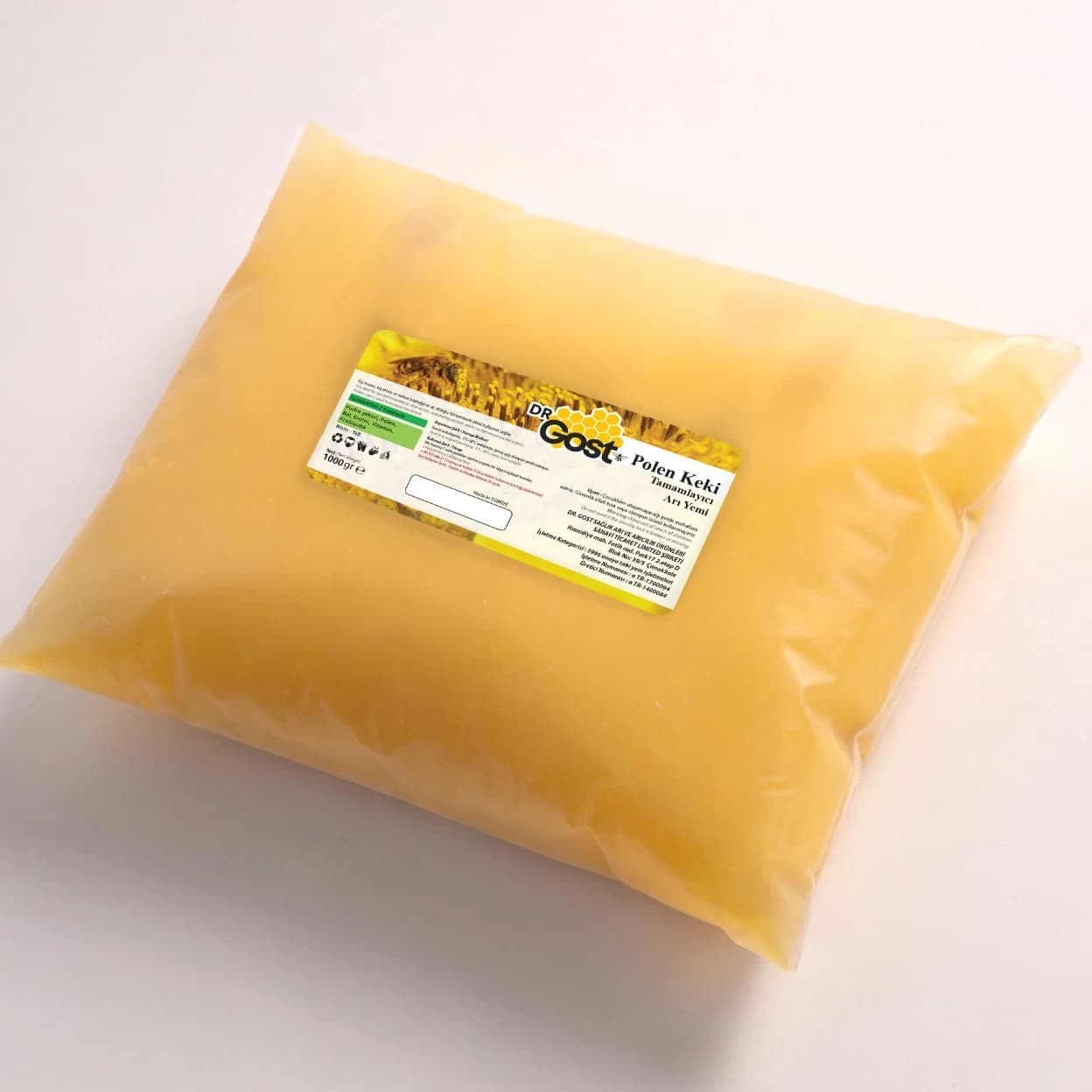
- Foderdeg med pollen — what you want in March. We call ours a pollen cake.
- Drivfoder — feed given to stimulate. Thin solution, small doses, in spring.
- Stödfoder — feed given because the colony is short right now. Same paste, different purpose.
- Invintringsfoder — the heavy autumn feed meant to be stored.
Varroa and feed are the same question
A starving colony defends itself worse, and a colony under heavy mite load burns through what it has faster. Treat in the right window, measure instead of judging, and support the colony afterwards — Summer varroa monitoring and Natural varroa control take that part.
Where Dr. Gost fits — and what we do and do not say
We import the Dr. Gost range and we are its EU distributor, so it is fair to be plain about what we claim.
This we say, and we stand behind it: the products are complementary feed and hive-care preparations. We publish their composition, their dosage and the time of year they are meant for. We say where they come from and who developed them.
This we do not say: we do not claim that any of them treats a disease, controls varroa, or replaces an authorised medicine. Those products are separately authorised, and the route to them is a beekeeping association or Jordbruksverket. Nor do we claim outcomes we cannot produce substantiation for — and where the manufacturer is the source, we say the statement is theirs rather than ours.
That last part is not caution for its own sake. We are registered with Jordbruksverket as a feed business operator, and that registration is exactly what makes an outcome claim something that must be evidenced on request.
Which product, when
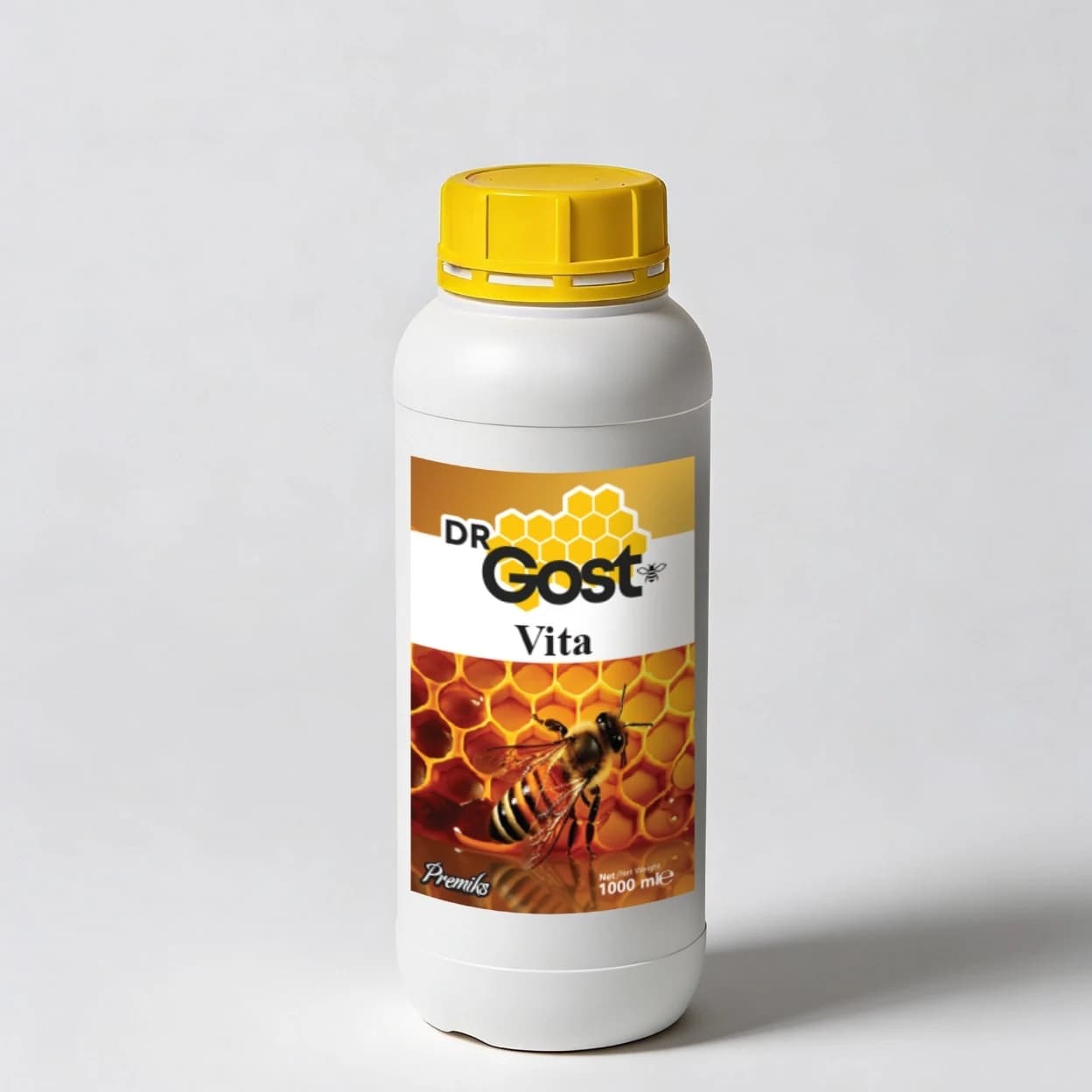
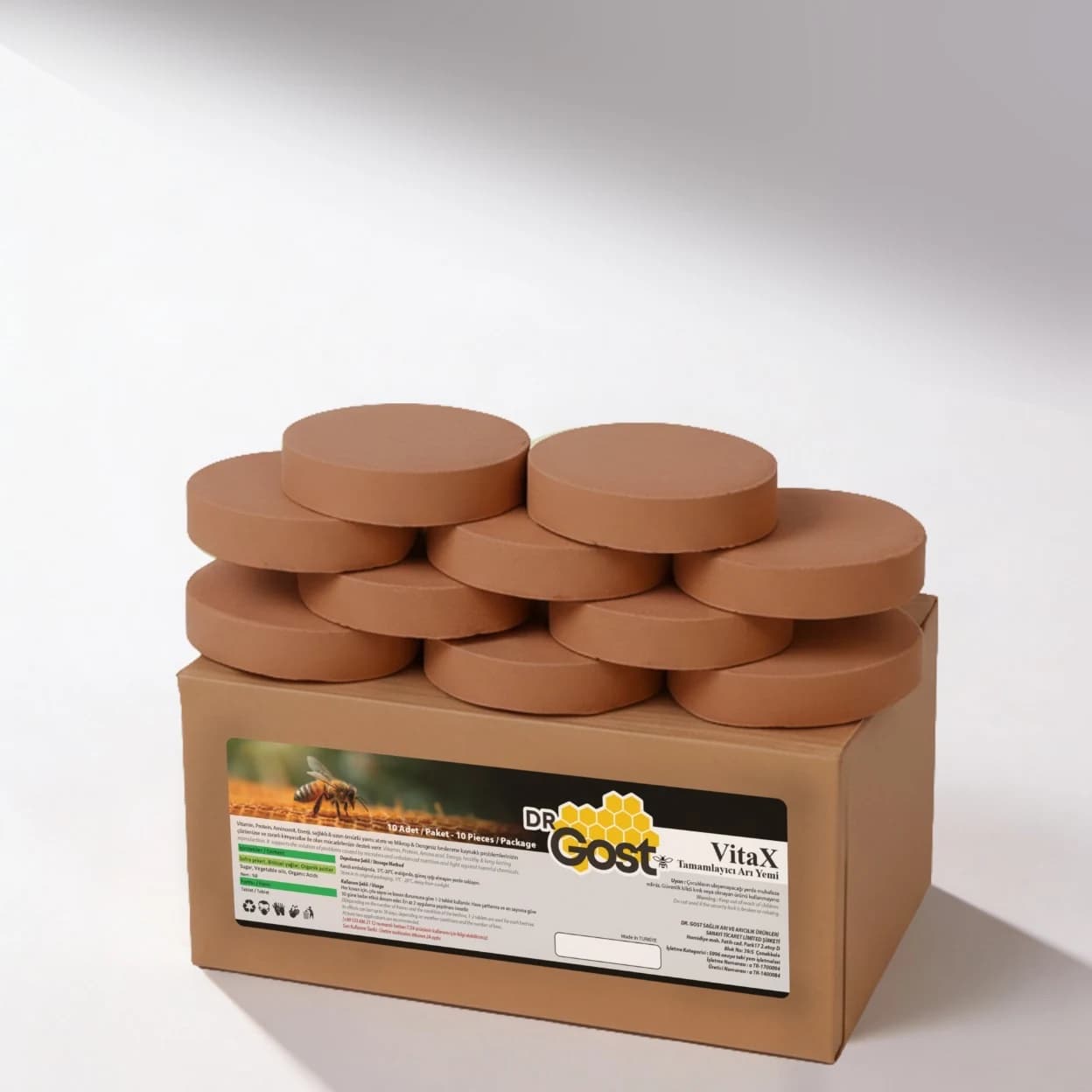
The range is built around three needs in two forms. The form is the practical difference: liquid is mixed into feed, tablet goes straight into the hive with nothing to mix at all.
| Need | Liquid | Tablet |
|---|---|---|
| Vitamins, protein, amino acids | Vita | Vitax |
| Probiotic cultures | Bion | Bionix |
| Several combined | Full | Fullix, Ultrax |
| Digestive enzymes | Cont | — |
| Powder form | Vipo | — |
Protein in March is its own thing: the pollen cake goes directly over the cluster so nurse bees reach it without leaving the warmth. There is also a winter version with a different consistency.
The order we follow ourselves in spring: energy first, then protein. Wake the colony, then give it something to build with.
⚠️ And one thing that applies to all of the above: more is not better. The dose is on the label and it is calculated. Overdosing does not produce faster development; it produces damp in the hive.
What we saw ourselves — six weeks in Svinninge
We sell this range, so our own experience is not proof. But it is ours, it is first-hand, and we filmed it: we fed the Dr. Gost syrup in our own hives and followed the frames for six weeks. What we saw, and what we could not determine, is in Trying Dr. Gost bee nutrition: a six-week review.
What we can say without qualification is what we could see: the bees took the feed without hesitation. A colony that leaves a feed untouched is telling you something, and they did not.
Who developed the range
The Dr. Gost range was developed and tested by Dr. Soner Güner, who holds a doctorate in beekeeping and more than twenty years of research behind him. He is the author of Yeni Nesil Doğal Arıcılık — "New-Generation Natural Beekeeping" — described by its Turkish bookseller as the first written work in the country on the subject, and he runs a YouTube channel and an Instagram account about bees and natural products with some eighteen thousand followers. The trials behind the preparations are run in Dr. Gost's own hives and published on that channel as they go.
Being able to say that is the whole point. Provenance is a fact that can be checked; an outcome claim without substantiation is not. The background to why the range comes from Turkey in particular is in Why Turkey is the world's second honey producer.
Economics for a small beekeeper
Under twenty hives, the big question is not what a bottle costs but what a lost colony costs. Three habits go a long way:
1. Budget per hive, not per season. Set a fixed "spring start" allowance per hive and hold to it.
2. Buy before Christmas, not in March. The pollen-cake window is late February. In March everyone is looking at once.
3. Trial it on part of the apiary. Five hives with, five without, and write down what you see. That is the only comparison that applies to your apiary.
The five mistakes that cost most
1. Trusting the eye instead of the scale and the count. Both feed and varroa are measured.
2. Opening the hive too early. Below +10 °C, curiosity costs heat.
3. Feeding thin syrup in autumn. Twice the water to evaporate, at the worst time of year.
4. Believing sugar is enough. Energy is not building material.
5. Feeding too much. Damp, mould, and a hive worse off than before.
In short
Nordic beekeeping rewards whoever plans backwards from winter. Weigh instead of guessing, measure instead of judging, open rarely and briefly, and put the feed where the bees reach it without breaking cluster. The range we sell is a supplement inside that frame — not a shortcut past it.
Frequently asked questions
When should spring feeding start in a Nordic climate?
Not on the first warm day. Below roughly +10 °C the colony stays clustered, so a full inspection costs more heat than it returns, and thin syrup fed into a cold hive is water the bees have to evaporate. The order that works is: read the hive from outside, weigh it rather than guess, and feed solid — foderdeg or a pollen cake laid directly over the cluster — until the weather allows a real inspection. Stimulative feeding with thin solution belongs to the point where day temperatures are steadily rising, not to the first thaw.
Is sugar enough, or do bees need protein as well?
Sugar is energy and protein is building material, and a colony needs both for different jobs. Syrup and foderdeg fuel flight and warmth but raise no brood; the protein that turns eggs into workers comes from pollen. That is why a colony can have plenty of stores in March and still fail to grow — the queen is laying before the willow has opened, so the colony draws down its stored pollen at the worst possible moment. The common and expensive misreading is "they have feed, they are fine".
Do the Dr. Gost products treat varroa or bee diseases?
No, and we do not present them as doing so. They are complementary feed and hive-care preparations: we publish what is in them, how they are dosed and when in the year they are meant to be used. Treatments for varroa and for notifiable bee diseases are separately authorised products, and the route to them in Sweden is your beekeeping association or Jordbruksverket. Where a statement about the range comes from the manufacturer, we say it is theirs rather than ours — PMA Nordic AB is a registered feed business operator, and that registration is what makes an outcome claim something that has to be evidenced on request.
What is the practical difference between the liquid and the tablet?
Whether you have to mix anything. The liquids are dosed into feeding syrup, which suits the days you are already making feed up. The tablets go straight into the hive: one or two per colony depending on frames and condition, lasting up to 30 days, with nothing to measure and nothing to stir. In cold weather that matters more than it sounds, because a tablet laid over the cluster needs the lid off for seconds rather than for a feeding round. The pollen cake works the same way and for the same reason.
Listen to the same subject
The Beekeeper's Year: A Month-by-Month Nordic CalendarEpisode 5 · 13 minProducts mentioned in this article
You might also need
This is written by a working apiary, not an agency
Buzzin’ Bees is in Svinninge. We sell the honey our own hives make, and the Dr. Gost supplements we bring into Sweden.