Honey in the Kitchen: Breakfast, Small Plates and Fika
By Adam M Akkemik — beekeeper in Svinninge · Jordbruksverket registered · Biodlarna Stockholm member
Eleven ways to use honey that are not a spoon in your tea: four breakfasts, two ten-minute small plates and five ideas for fika. What is actually in the jar, why nothing may lawfully be added to it, and the one rule that governs every recipe here — the honey goes on last.
We sell honey, and the most common question we get is not what it costs. It is: what do I do with it?
In most Swedish kitchens the answer is a spoon in the tea — and then the jar stays put until the next cold. Which is a waste, because honey is not sugar with a flavour. It is an ingredient that changes character with the bloom and the season, and it does most for you where it gets to be one of very few things on the plate.
Eleven suggestions below: four for breakfast, two small plates and five for fika. None takes more than ten minutes, and none of them cooks the honey.
What is actually in the jar
Four fifths of honey's weight is fructose and glucose — the nectar's own single sugars. Table sugar, sucrose, is two sugars bound together and has to be split before it can be used; in honey the fructose and glucose sit separately. Alongside them are small amounts of maltose and sucrose.
The rest is water the bees collected as nectar from flowers and then fanned down in the hive. Honey also contains natural acids, enzymes, minerals and polyphenols. The proportions are small, but they are what makes the aroma, the colour and the finish.
Our own honey sits at 17–18 % water, with a pH between 3.5 and 4.5 — acidic. Those two numbers are why honey does not spoil: little water and low pH stop most microorganisms on their own.
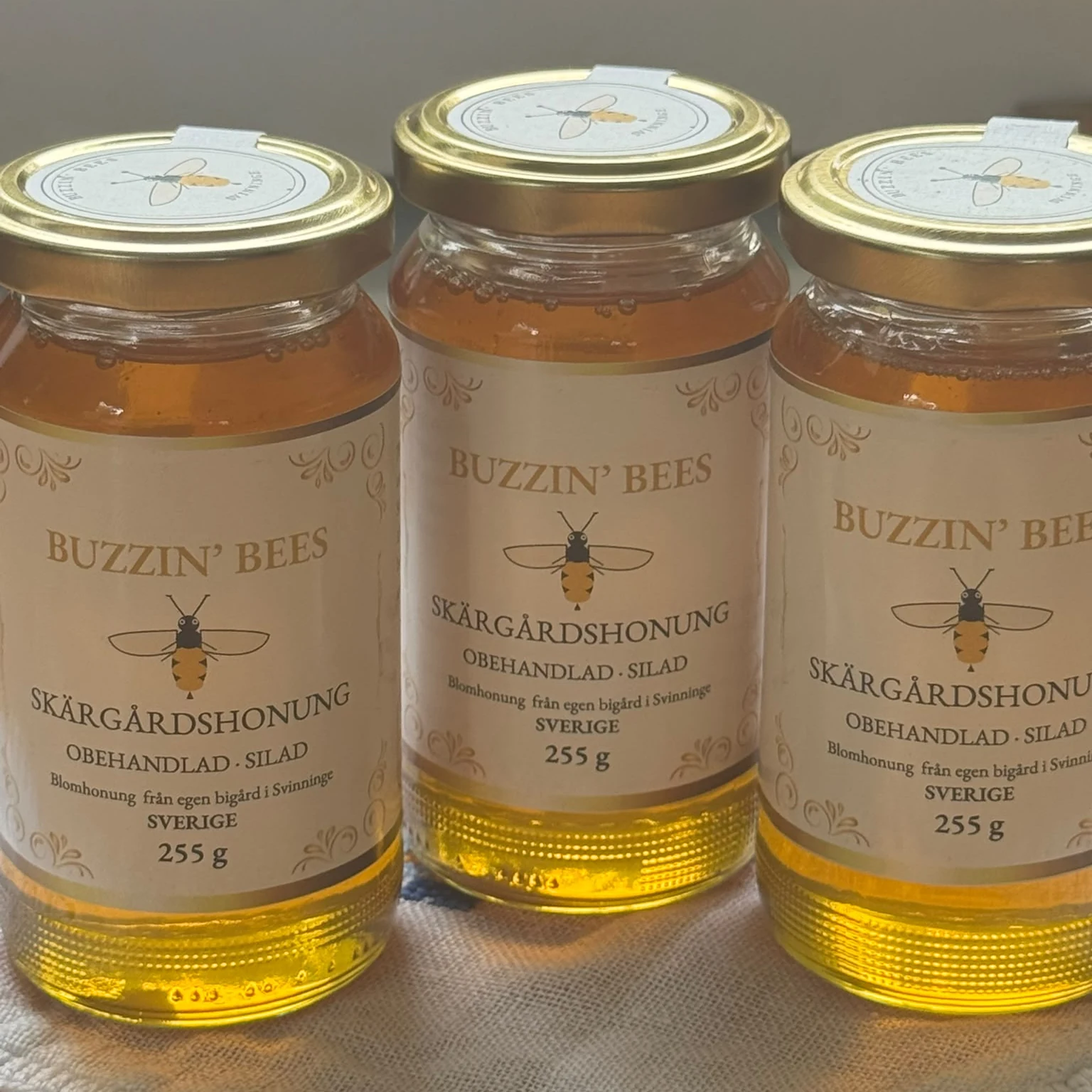
Blossom honey, the early-summer harvest — pale and mild.
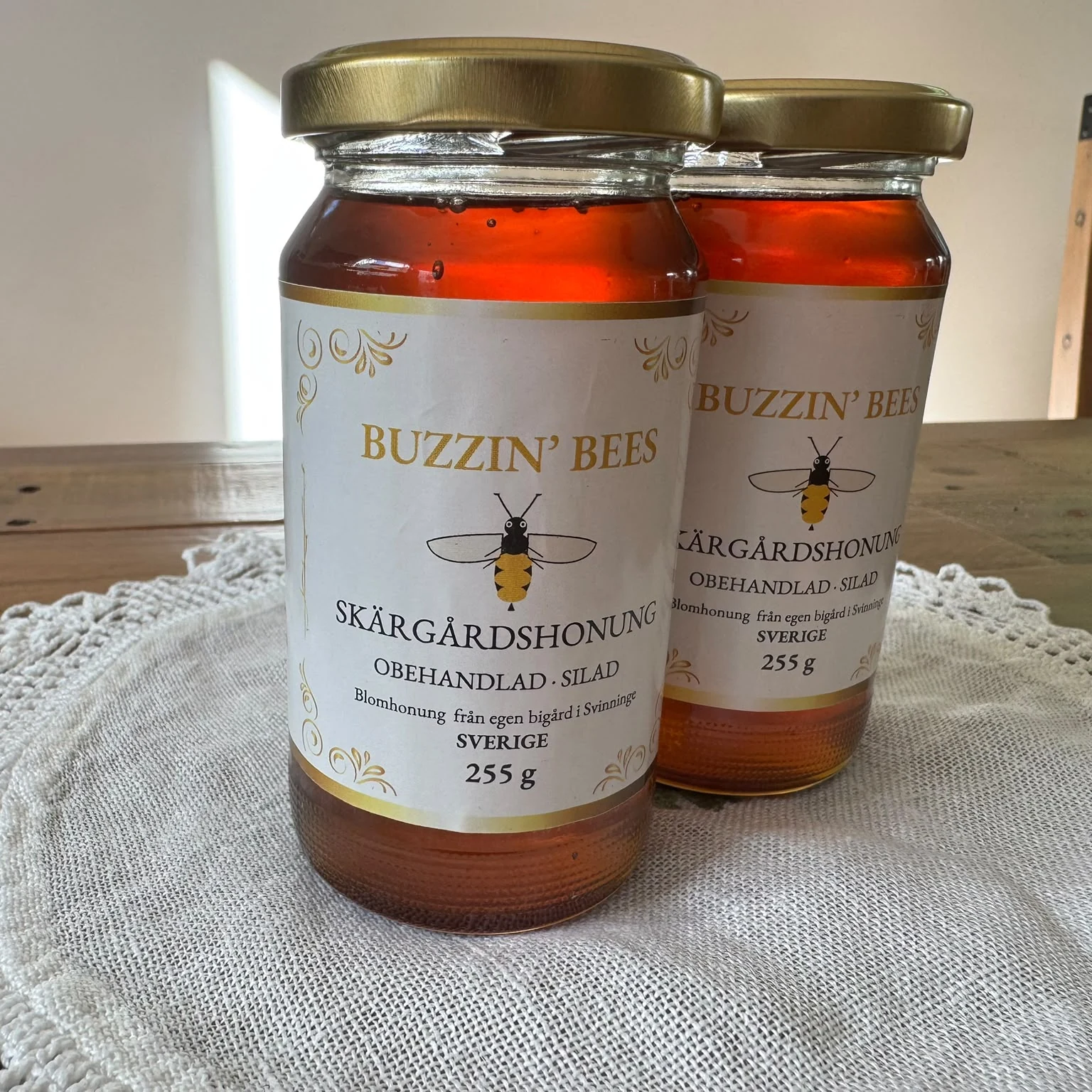
Late-summer honey from the same apiary, the same year — darker and stronger.
Colour is not a quality scale, it is a season marker. Our blossom honey from early summer is pale and mild, the late-summer honey darker and fuller. Same apiary, same year, two different jars. If you want to go deeper, there is a walk through the Swedish honey varieties in its own article.
And because the composition follows the bloom, no harvest tastes like the last one. Every lot is its own.
Nothing may be added to honey
This is worth stating plainly, because it is often presented as a marketing point: honey being free of additives is not something we promise. It is what the word means in law.
The EU Honey Directive (2001/110/EC) and the Swedish regulations (LIVSFS 2025:3) define honey as a product to which nothing may be added and from which nothing essential may be removed. A jar labelled honey may not contain sugar, syrup, water, flavouring or preservative.
That is why there is no ingredients list on the back — there is only one ingredient. Conversely: an ingredients list on a honey jar means the product is not honey.
The heat rule, once and for all
Honey's aroma lives in volatile compounds, and they do not survive boiling water. Neither do the enzymes.
In practice: never boil honey, and do not stir it into anything still steaming. Brew the tea, let it come down to drinkable, add the honey then. If you are frying or grilling, the honey goes on after the pan or the dish has left the heat.
That is the whole rule, and it governs every recipe below. We have written more about honey in hot tea and what the temperature actually does in a separate article.
Four ways to start the day
Kvarg, toasted oats, honey
Toast two tablespoons of rolled oats in a dry pan, 3–4 minutes, until they smell nutty. Tip them over a bowl of kvarg. A teaspoon of honey over the top, and a few crushed walnuts or almonds.
The toasted oats' nuttiness brings out the floral side of the honey. The honey goes on last — pour it onto hot oats and the aroma is gone.
Brown butter, flaky salt, honey on sourdough
Brown a knob of butter in a pan until it smells nutty. Toast a slice of sourdough, brush on the brown butter, drip honey over it and finish with flaky salt.
The salt cuts the sweetness and the brown butter ties the two together. Three ingredients, two minutes.
Aged cheese, honey, walnut
Slice an aged cheese — Västerbotten, a firm goat's cheese, an aged gruyère. Honey over it, crushed walnut, black pepper.
The salty sharpness of an aged cheese against honey is an old pairing. Dark honey holds up better here than pale.
Bal kaymak — from the Balkans to Anatolia
The shared breakfast plate of a belt running from the Balkans through Anatolia. The same product is called kajmak in the Balkans and kaymak in Turkey. In that belt honey is not something added to breakfast, it is one of breakfast's foundations — Turkey is, according to FAO, the world's second largest honey producer after China, at over 115,000 tonnes a year, and third by number of hives.
What kaymak is: milk is simmered slowly, and the fatty layer that gathers on the surface is skimmed off and left to rest. Unsalted, unsweetened, very rich. Not butter and not fresh cheese — something between them, and almost flavourless on its own. Which is exactly why it works against honey.
A tablespoon of kaymak on the plate, the same amount of honey beside it — or poured around it, which is how it is most often served in Turkey. They are not stirred together. They meet on the bread. Eat with fresh bread, a little at a time off the tip of the spoon. If the bread is warm the kaymak softens and the honey runs; they join in the mouth.
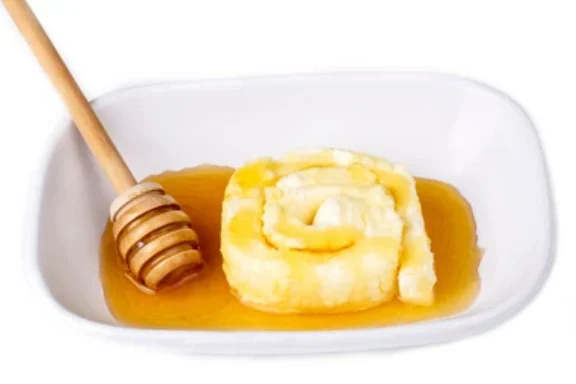
How it is usually served: the honey is poured around the kaymak, not into it.
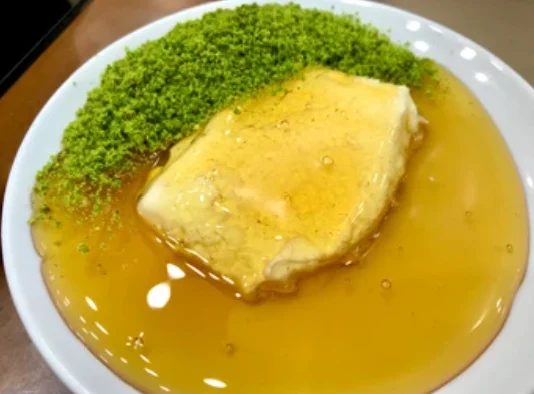
Ground pistachio is a common addition in Turkey.
How to find it in Sweden: search for kaymak, or kajmak in the Balkan spelling. In English it is clotted cream. Under those names it turns up, and it can be ordered online.
One small warning: the Balkan version sold as kajmak can be slightly tangy and salted — good, but a different thing. The one that meets honey is the unsalted, neutral one. If you cannot find any, the nearest substitute is mascarpone: not the same thing, but the same job — rich, unsalted, a calm base.
Small plates in ten minutes
Rule: the honey goes on last. Nothing here is cooked with honey — it burns in the pan and in the oven, turns bitter and loses its aroma. Drizzle it over after the dish has left the heat.
Halloumi, lemon, chilli flakes
Slice halloumi a centimetre thick. Fry in olive oil until both sides are golden. Take the pan off the heat, drizzle honey over, squeeze half a lemon, scatter chilli flakes.
The halloumi is already salty, the lemon brings acid and the chilli heat. The honey comes in as the fourth taste and pulls the rest together.
Warm chèvre, honey, walnut, thyme
Cut thick slices from a chèvre log and lay them in an oven dish. 200 °C for 6–8 minutes, until the edges soften. Take the dish out; honey over, crushed walnut and fresh thyme. Serve with toast.
It is a classic for a reason: the salt of warm cheese, the sweetness of honey, the bitterness of walnut. The honey does not go into the oven — it goes on after the cheese comes out.
Five ideas for fika
- In cinnamon bun dough, as part of the sugar. Swap a third of the sugar for honey and pull the liquid back slightly. The bun is softer and keeps longer — honey holds moisture.
- On a cheesecake, instead of jam. A dark honey with a little flaky salt does more for a cheesecake than berry jam does.
- In coffee — but in the lukewarm cup. Not the freshly brewed one. Same rule as the tea.
- Over vanilla ice cream, with toasted nuts. Cold ice cream and room-temperature honey set against each other; that is part of the point.
- On a slice of gingerbread with butter. The spices in gingerbread and the fullness of late-summer honey sit close together.
If the jar goes grainy
That is not damage, it is physics. The glucose in honey cannot stay in solution forever and comes out as crystals. Glucose-rich honey sets faster, fructose-rich honey slower.
If you want to soften it: stand the jar in lukewarm water, and do not go above 40 °C. A microwave and boiling water destroy the thing you are trying to rescue. The whole argument — and why a jar that stays perfectly smooth for months has usually been heated — is in the article on crystallised honey.
How to choose a honey — and how to store it
Four things can be read straight off the jar:
- The origin must be on the label. If you see the wording "blend of EU and non-EU honeys", the trail is gone — that honey cannot be traced. If it names a country, a district or an apiary, it can.
- No ingredients list. See the section above.
- Crystallisation is normal. A jar that is perfectly smooth and glossy after months has usually been warmed.
- Honey assessment. If the honey has been through the Swedish Beekeepers' Association assessment, its water content, purity, aroma and taste have been measured by someone other than the seller. Each of our two harvests has its own certificate of quality, and both are published on our honey page.
Raw honey — or unpasteurised honey, in practice the same thing — means honey that has not been heated and not finely filtered. Heat treatment changes aroma and enzymes; fine filtering also removes the pollen. Neither term is protected in law, so it is worth asking the producer what was actually done.
Storage: room temperature, lid closed, out of the light. Not the fridge — cold speeds up crystallisation. And never a wet spoon in the jar: water getting in is the one thing that upsets the balance protecting the honey.
Children under one year should not be given honey. The Swedish Food Agency is explicit about it: honey can contain spores of Clostridium botulinum which can multiply in an infant's gut. Above one year, and for adults, that risk does not exist. It applies to all honey — raw, pasteurised, cheap or expensive.
Sources
- Codex Alimentarius, Standard for Honey (CXS 12-1981) — the definition of honey and its composition criteria.
- Council Directive 2001/110/EC relating to honey.
- Swedish Food Agency regulations on honey, LIVSFS 2025:3 — water content and conductivity.
- Livsmedelsverket — the food composition database, and the agency's advice on honey for children under one.
- Sveriges Biodlares Riksförbund — honungsbedömning (honey assessment).
- FAO / FAOSTAT — Honey and beeswax statistics, production and hive numbers by country.
Frequently asked questions
How do I choose a good honey for breakfast?
Read the label first. The country of origin has to be there: if it says "blend of EU and non-EU honeys", that honey cannot be traced back to anywhere. A country, a district or a single apiary means it can. Second, there should be no ingredients list — honey is a single-ingredient food, and a list means the product is not honey. Third, do not be put off by crystallisation: a jar that stays perfectly smooth and glossy for months has usually been warmed. In Sweden there is a fourth marker, honungsbedömning: if the honey has been through the Swedish Beekeepers Association assessment, its water content, purity, aroma and taste were measured by someone other than the seller.
What does raw or unpasteurised honey actually mean?
Honey that has not been heated and not finely filtered. Heat treatment changes the aroma and the enzymes; fine filtering also takes out the pollen. Raw honey is therefore closest to how it left the hive, which is also why it crystallises sooner and varies from jar to jar. "Raw" and "unpasteurised" mean the same thing in practice, and neither term is protected in law — so it is worth asking the producer what was actually done.
Can I fry or bake with honey?
You can bake with it, but you should not fry or grill with it. In a pan or under a grill honey burns, turns bitter and loses its aroma, so in every savoury recipe it goes on after the dish has left the heat. In baking it behaves differently because it is inside a dough rather than exposed: swapping a third of the sugar in a bun dough for honey works well and keeps the bun soft for longer, since honey holds moisture. The same rule applies to drinks — brew the tea or coffee, let it cool to drinkable, then add the honey.
What is the difference between your blossom honey and your late-summer honey?
The season, and it shows in the colour. The blossom honey is the early-summer harvest: pale and mild. The late-summer honey is taken at the end of the season and is darker and fuller. Same apiary in Svinninge, same year, two different jars — because the composition follows whatever the bees were foraging on. Colour is not a quality scale, it is a season marker. The pale one suits kvarg, fruit and a light breakfast; the dark one holds up better against aged cheese, walnuts and gingerbread.
Can children eat honey?
Not under one year of age. The Swedish Food Agency advises against giving honey to children under one, because honey can contain spores of Clostridium botulinum which are able to multiply in an infant gut. Above one year, and for adults, that risk does not exist. It applies to all honey without exception — raw, pasteurised, cheap or expensive — so it is not a question about the type or the quality of the jar.
How should honey be stored?
At room temperature, with the lid closed, out of the light. Not in the fridge — cold speeds crystallisation up rather than preventing it. And never put a wet spoon in the jar: honey keeps because it holds little water, around 17 to 18 per cent in ours, and water getting in is the one thing that upsets the balance protecting it.
Where do I buy kaymak in Sweden?
Search for kaymak, or kajmak in the Balkan spelling; in English the product is called clotted cream. Under those names it turns up in Swedish shops and online, so it can be ordered. One caveat: the Balkan version sold as kajmak is sometimes slightly tangy and salted, which is good but a different thing — the one that pairs with honey is the unsalted, neutral one. If you cannot find any, the nearest substitute is mascarpone: not the same thing, but the same job, a rich unsalted base.
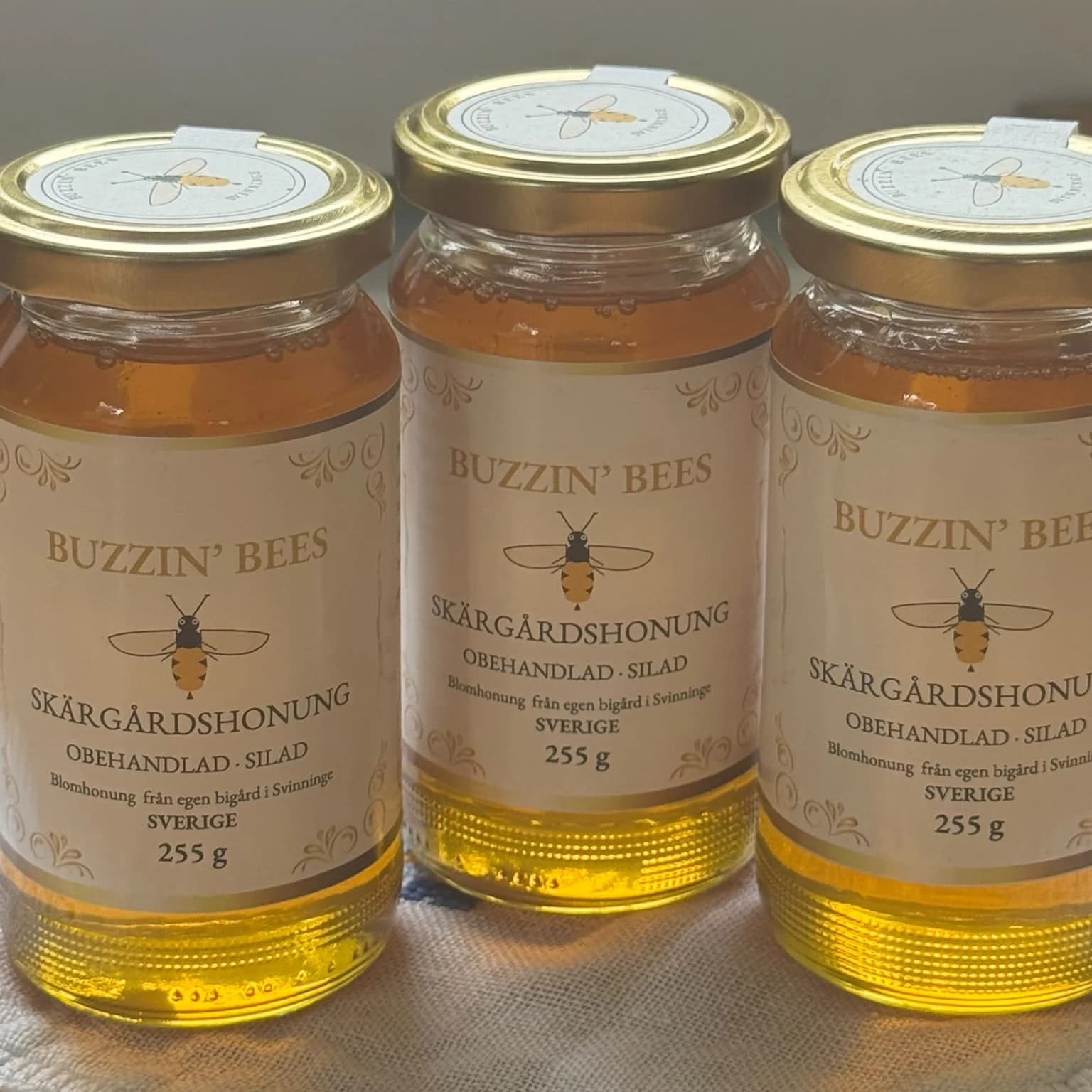
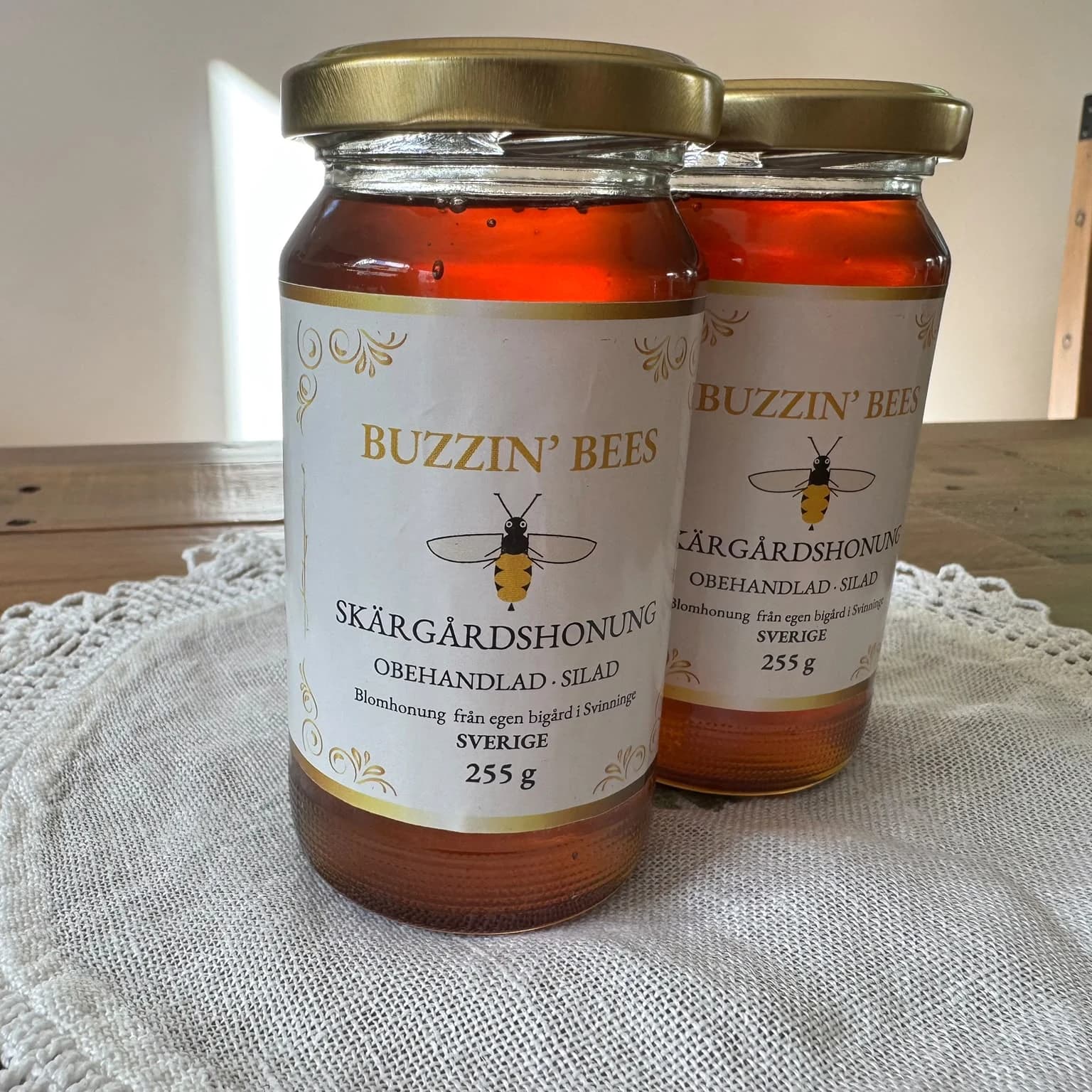
Products mentioned in this article
You might also need
This is written by a working apiary, not an agency
Buzzin’ Bees is in Svinninge. We sell the honey our own hives make, and the Dr. Gost supplements we bring into Sweden.