Honey in Hot Tea: Let It Cool to 40 °C First
By Adam M Akkemik — beekeeper in Svinninge · Jordbruksverket registered · Biodlarna Stockholm member
Below 40 °C nothing measurable happens. At 71 °C diastase drops 60 % in fifteen minutes — and tea is served at 80–90 °C. Toxic it never becomes.
There is a version of this question that comes round every winter: is it true that putting honey in hot tea makes it harmful?
The short answer is no. The longer answer is more interesting, and it costs you more than the short one suggests — because while hot honey is not dangerous, it is also not really honey any more.
What is in honey besides sugar
By weight, honey is mostly sugar and water. If that were all it was, heat would not matter. What makes it worth more than syrup is the small fraction that is not sugar: enzymes the bees put there themselves.
Three of them matter most.
Glucose oxidase is the one that makes honey antibacterial. It slowly turns glucose into gluconic acid and hydrogen peroxide, and that peroxide — in tiny, continuous amounts — is much of why honey does not spoil, and why people have been putting it on wounds for thousands of years.
Invertase is the enzyme that made the honey in the first place. Bees add it to nectar to split sucrose into glucose and fructose, which is most of what ripening actually is.
Diastase, an amylase, breaks down starch. It is the one regulators measure, because it is robust enough to survive normal handling and degrades predictably with heat and age — which makes it a good witness.
What heat does, degree by degree
The three are not equally fragile. Glucose oxidase goes first, then invertase, then diastase. So by the time a laboratory can measure a fall in diastase, the antibacterial fraction has been gone for a while.
Up to about 40 °C — nothing measurable. Studies heating honey at 40 °C find no significant effect on HMF or on diastase activity. This is roughly the range inside a hive on a warm day, and honey is built to be fine with it.
40–50 °C — slow, and only with long exposure. Invertase starts losing activity from around 35 °C, but over days rather than minutes. Destroying diastase at 40 °C takes something on the order of a month of continuous heating.
Above 60 °C — the curve turns. This is where HMF formation begins to accelerate sharply.
71 °C — diastase drops by 60 % or more in fifteen minutes. At 80 °C, the destruction that took about a month at 40 °C takes roughly an hour, and invertase is finished in under ten minutes.
Tea, at 80–90 °C. There is no gentle version of this. A spoonful stirred into a fresh cup reaches brewing temperature within seconds, and the enzymes do not survive the journey.
So is it toxic?
No — and it is worth being straight about that, because much of what is written on the subject is not.
The compound everyone points at is HMF (hydroxymethylfurfural), which forms when sugars break down under heat and acidity. It is real, it does rise with heating, and the EU honey directive caps it at 40 mg per kilo for honey sold in Europe — 80 mg/kg for honey of tropical origin — alongside a minimum diastase level. In Sweden that is enforced by Livsmedelsverket.
But HMF in honey is regulated as a freshness and processing marker, not as a poison. You will take in more of it from a cup of coffee, a handful of dried fruit, or anything caramelised, than from a spoon of overheated honey. The limit exists so that "honey" cannot quietly come to mean "honey that was cooked until it was easier to bottle".
So the reason not to put honey into boiling tea is not that it becomes dangerous. It is that you paid for something and then destroyed the part you were paying for. What is left is a fairly expensive sugar.
If you like honey in tea — and it is a perfectly good thing to like — let the cup stand until you could comfortably drink it, then stir the honey in. That is about the right temperature by definition, because your mouth and the enzymes hold similar opinions about heat.
The other way honey gets ruined: crystallisation
Crystallised honey is not spoiled honey. It is honey doing what honey does. Most varieties granulate sooner or later depending on their glucose-to-fructose ratio, and rapeseed honey will do it in weeks. A jar that never granulates at all is usually a jar that was heated hard enough to stop it.
The mistake is what people do next. A microwave, or a pan on the hob, will liquefy it in minutes and take the enzymes with it.
The right way is dull, and it works. Stand the jar in a water bath no hotter than about 40 °C — warm to the hand, not hot — and leave it there. It takes hours rather than minutes, and it comes back clear with everything still in it. Stir occasionally. Do not top the bath up with boiling water while the jar is sitting in it.
There is more to it than that — including why stirring turns hours into minutes, and what a granulating jar actually tells you about how the honey was treated. See Crystallised Honey.
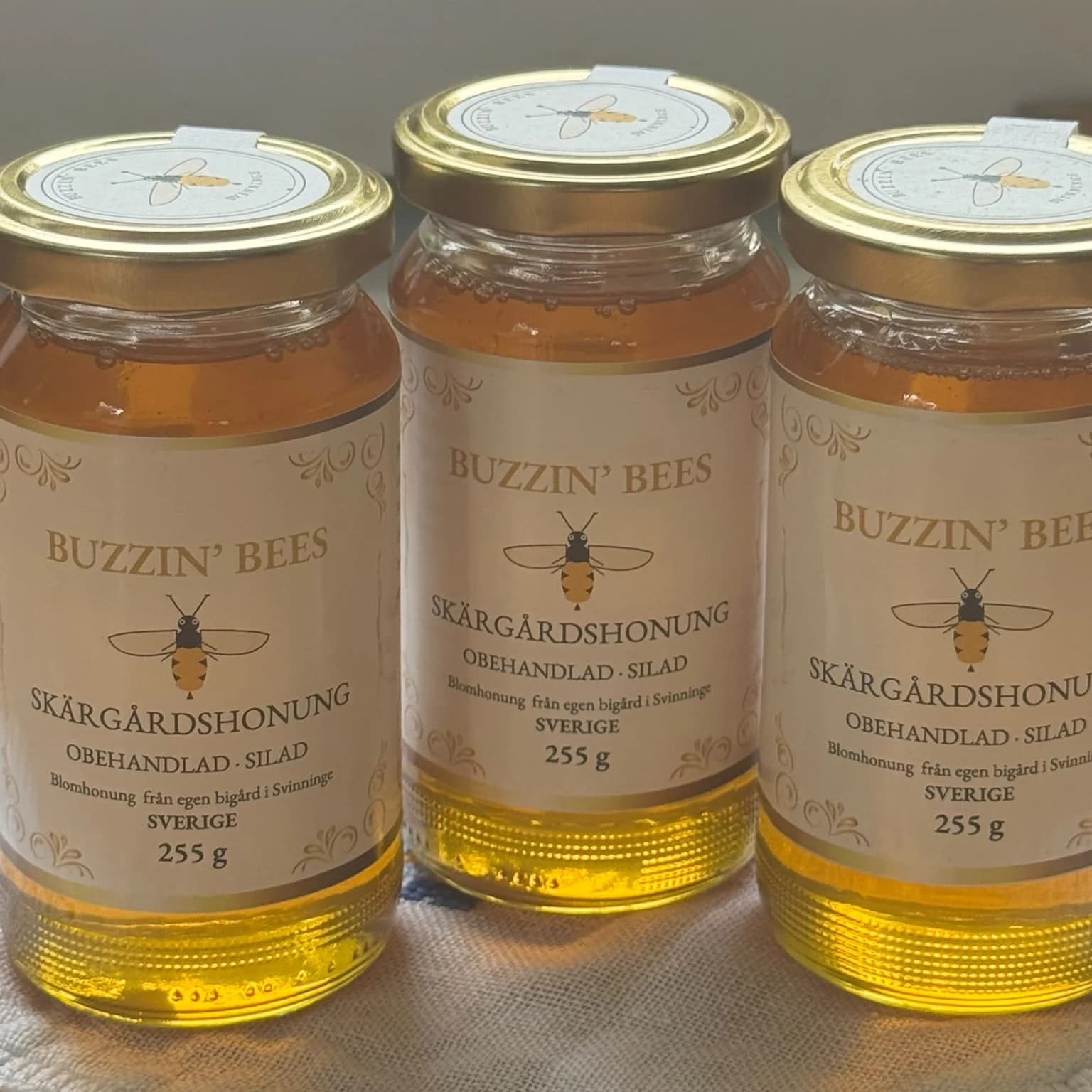
The honey we bottle ourselves is untreated and strained, so everything above applies to it directly.
The same rule, for the bee supplements
This is not only a honey question, and beekeepers reading it will already have seen where it goes.
Everything in the Dr. Gost range that ends up in feeding syrup — the vitamins, the probiotics, the prebiotics, the enzyme preparations — is subject to exactly the same physics. Live cultures and enzymes do not survive heat, and freshly made syrup is far hotter than they can take.
So the instruction on those products is the same as the one for your tea: let it cool below 30–40 °C first. Syrup that feels warm rather than hot.
It is the single most common way to spend money on a supplement and get nothing back for it — and it happens in the kitchen, not in the hive.
And if the tea was the only thing you had planned for the jar, there are eleven other suggestions in honey in the kitchen. The same temperature rule runs through all of them.
If the reason for the cup was a sore throat rather than the taste, what the research says about honey for cough and sore throat is a separate article — including the one case where honey must never be given at all: no honey of any kind under twelve months.
Frequently asked questions
Is honey in hot tea toxic?
No. The compound people point at is HMF, and in honey it is regulated as a freshness and processing marker rather than as a poison — you take in more of it from a cup of coffee, dried fruit or anything caramelised. The reason not to do it is different: the enzymes you paid for do not survive the cup.
At what temperature does honey lose its enzymes?
Up to about 40 °C nothing measurable happens — that is roughly hive temperature on a warm day. Above 60 °C HMF formation accelerates sharply; at 71 °C diastase activity falls by 60 % or more within fifteen minutes, and at 80 °C invertase is finished in under ten. Tea is brewed at 80–90 °C, so a spoonful stirred into a fresh cup reaches that within seconds.
What is the legal HMF limit for honey in the EU?
40 mg per kilo for honey sold in Europe, and 80 mg/kg for honey of tropical origin, alongside a minimum diastase level. In Sweden it is enforced by Livsmedelsverket. The limit exists so that "honey" cannot quietly come to mean honey that was cooked until it was easier to bottle.
How do I liquefy a crystallised jar without ruining it?
Stand the jar in a water bath no hotter than about 40 °C — warm to the hand, not hot — and leave it there, stirring occasionally. It takes hours rather than minutes and comes back clear with everything still in it. Do not use a microwave, a pan on the hob, or boiling water, and do not top the bath up with boiling water while the jar is in it.
Does the same rule apply to bee supplements added to feeding syrup?
Yes — it is the same physics. Live cultures and enzymes do not survive heat, and freshly made syrup is far hotter than they can take, so the instruction on those products is to let the syrup cool below 30–40 °C first. Syrup that feels warm rather than hot.
Products mentioned in this article
You might also need
This is written by a working apiary, not an agency
Buzzin’ Bees is in Svinninge. We sell the honey our own hives make, and the Dr. Gost supplements we bring into Sweden.