Honey Analysis: What It Measures, and What Ours Showed
By Adam M Akkemik — beekeeper in Svinninge · Jordbruksverket registered · Biodlarna Stockholm member
Water content, conductivity, HMF, diastase and pollen — what each value means. Our two harvests sit at 17 % and 18 % water.
Some time every autumn the question arrives in one form or another: how do I know this is good honey? And right behind it: can it be measured?
It can. Not all of it — taste is taste, and no instrument decides whether you like heather — but more than most people think. Here is what actually gets measured, what each value means, and what our two harvests showed.
What a honey analysis measures
Five values come up again and again, and they answer different questions:
- Water content — will the jar keep?
- Conductivity — what kind of honey is it?
- HMF — how hard has it been treated?
- Diastase — the same question, from the other side.
- Pollen analysis — where does it come from?
The first three are written into law. In Sweden that is the Food Agency's honey regulations, LIVSFS 2025:3, which follow the EU honey directive.
Water content: the value that decides whether the jar keeps
The limit is 20 per cent. Above it the honey may not be sold as honey, and the reason is not procedural: water is what the yeasts need. Below about 18 per cent honey effectively does not ferment. Above 20 it is a matter of time.
It is also the value a beekeeper can influence most — by waiting. Unripe honey is heavier to carry and easier to extract, which is exactly why the temptation exists.
Conductivity: blossom honey or honeydew
Electrical conductivity measures mineral content, and it is used to separate blossom honey from honeydew honey. The line is 0.8 mS/cm: below it is blossom, above it is honeydew.
The directive writes in exceptions, and one is worth knowing in Sweden: ling heather honey sits naturally high without being honeydew. The same goes for eucalyptus and manuka, among others.
So the value says nothing about quality. It says what the honey is.
HMF and diastase: how hard the honey has been treated
These two belong together, because they measure the same thing from opposite ends.
HMF (hydroxymethylfurfural) forms when sugars break down under heat and time. The limit is 40 mg per kilo, or 80 for honey of tropical origin. A high value means the honey has been heated hard — or that it is old.
Diastase is an enzyme the bees put there themselves, and the same heat destroys it. The minimum on the Schade scale is 8. For honey that is naturally low in enzymes, 3 is enough — but only if HMF is simultaneously below 15, which is to say only if the honey is demonstrably fresh and gently handled.
That construction is elegant: you cannot blame a low enzyme reading on the variety if HMF is at the same time telling you the jar has been hot.
What heat does, degree by degree, is in honey in hot tea.
Pollen analysis: where the honey comes from
The pollen grains in honey are its fingerprint. A pollen analysis — melissopalynology — reads which plants the bees visited, and so roughly where in the landscape the honey came from.
It is also why removed pollen is a warning sign. The EU's coordinated control of imported honey in 2021–22 found exactly that among the methods used: pollen taken out to hide geographical origin. Remove the fingerprint and the evidence goes with it.
What the Swedish Beekeepers' Association assessment covers
The association has its own assessment, and it is not the same thing as a laboratory report. It goes through purity, aroma, taste, consistency, colour, water content and packaging — the measurable and the craft side alike.
Its strength is who performs it: somebody other than the seller. Its limit is that it does not measure conductivity, HMF or diastase.
What our two harvests showed
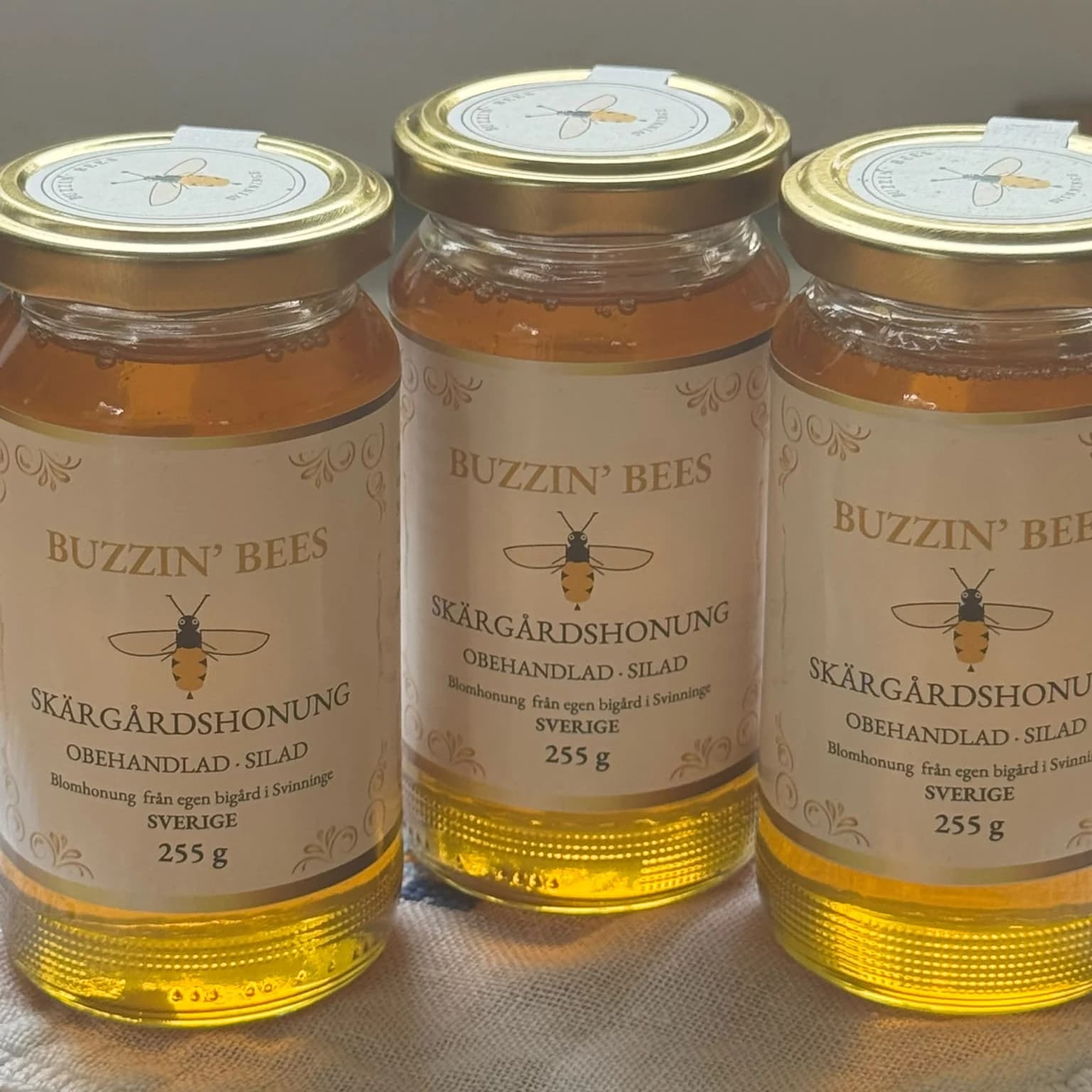
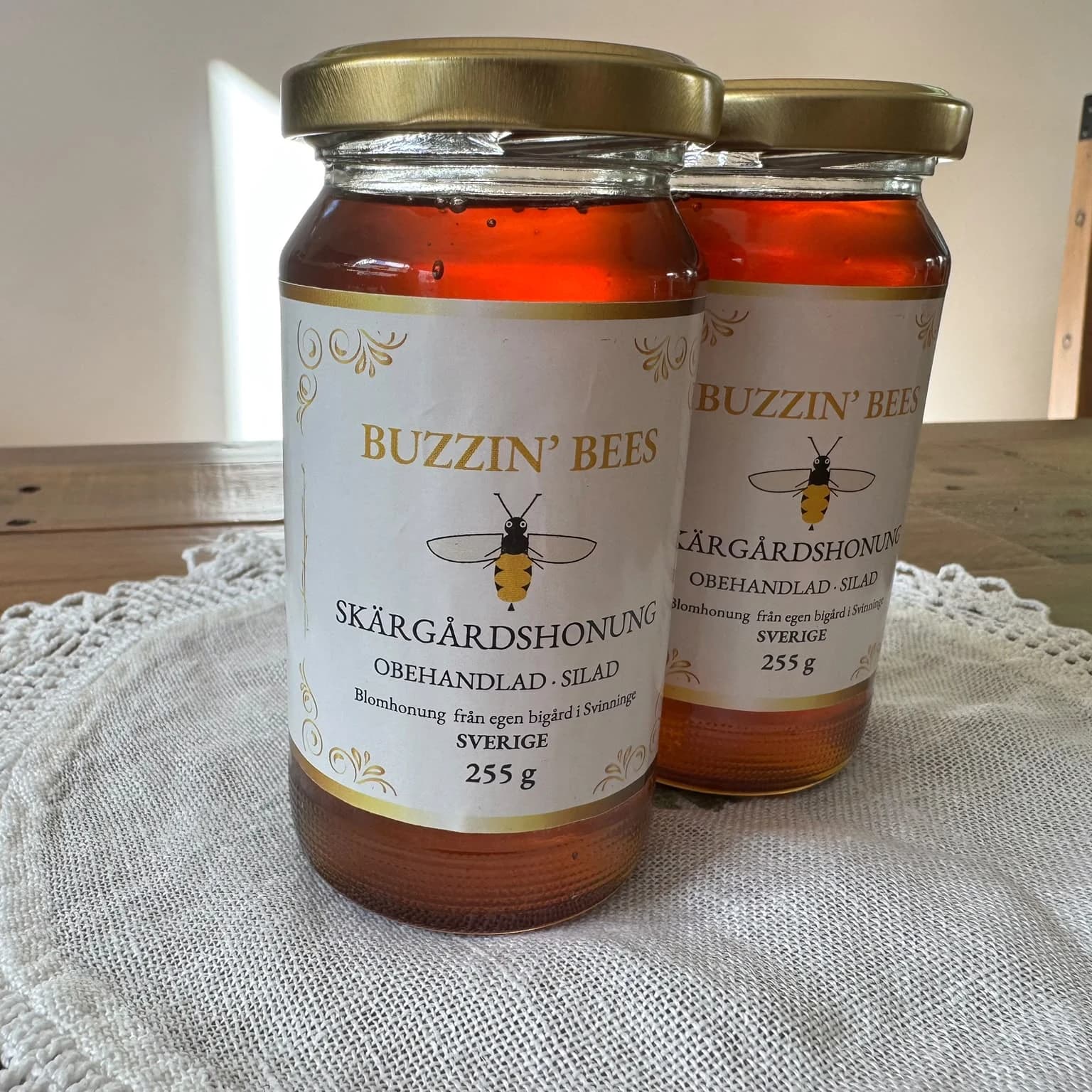
Water content: 17 per cent in the Skärgårdshonung, 18 per cent in the Sensommarhonung. Both sit well under the limit, and both passed the Swedish Beekeepers' Association honey assessment in 2026. Each harvest has its own certificate of quality, and both are published on our honey page.
To that add what we do and do not do: we never heat the honey above the hive's own temperature, and we strain it — wax and particles out, pollen in — rather than fine-filtering.
What we have not measured
Conductivity, HMF, diastase and pollen analysis we have not had done on our own harvests.
We would rather write that down than let the list above be read as though it were ours. A laboratory costs money, and for two harvests from the same apiary most of the values would be predictable — but predictable is not the same as measured, and that difference is the entire point of an analysis.
What we can say is what somebody other than us measured: the water content and the assessment. The rest is here so that you can read any honey analysis, not because we have one.
If you would rather compare two jars yourself, that is in what separates Swedish honey varieties, and why a jar sets is in crystallised honey.
Products mentioned in this article
You might also need
This is written by a working apiary, not an agency
Buzzin’ Bees is in Svinninge. We sell the honey our own hives make, and the Dr. Gost supplements we bring into Sweden.