Beekeeping in a Nordic Climate: Feeding, Spring Start and Natural Supplements
By Adam M Akkemik — beekeeper in Svinninge · Jordbruksverket registered · Biodlarna Stockholm member
Six months of winter, a short flowering and a spring that comes and goes. What a colony needs to get through, how to read it in March, what we feed our own bees in Svinninge and when — including the oxalic window, the damp, and the three weeks that decide the season.
Beekeeping in Sweden is not the same craft as beekeeping around the Mediterranean. The winter is long, the flowering is short, and spring rarely arrives when the calendar says it will. That makes feeding bees, bee feed and winter feeding something other than a side question: they are the work itself.
This is written from our own apiary in Svinninge, 25 kilometres north of Stockholm. It is about getting a colony through the winter, reading it in spring, and what we give our own bees — including the Dr. Gost range, which we import and sell, and which we used in our own hives long before we became its distributor.
Why Nordic beekeeping is a different game
Winter can run six months. Further north the bees sit still from October to April. A bad wintering or too little feed does not mean a weak colony — it means no colony.
Spring arrives and leaves again. It warms, the bees fly, and then it snows. They have started spending and there is nothing out there. That gap is called hungergapet in Swedish, and it is the commonest trap in this climate.
The stock matters. Nordic beekeepers often work with hardy lines. Southern races can struggle in some places.
So what decides the season is not what you do in July. It is how the colony went into winter, and what you do in the three weeks when it turns. Or as I put it about my own work: success in Nordic beekeeping is not measured by what you did in the summer, but by how you went into the winter.
The Swedish feed vocabulary, and what each word means
Swedish beekeeping has its own words for feed, and they do not mean the same thing. They are worth five minutes, because most misunderstandings start exactly here — and if you are reading in English while keeping bees in Sweden, these are the words on the bags.
- Invintringsfoder — the heavy autumn feed, meant to be stored and carried through the winter. Often just vinterfoder in everyday speech. And the answer to hur mycket vinterfoder till bin, the question everyone asks: 15–20 kg stored, weighed rather than guessed.
- Foderdeg — solid sugar laid over the frames; sold as fondant or vinterbikaka too. This is what you give when it is too cold for syrup.
- Sockerlag, also sockerlösning — sugar syrup. Thinner in spring, thicker in autumn.
- Drivfoder — the small, frequent early-spring feed that gets the queen going. Stimulative feeding: not meant to be stored, meant to wake the colony. It is the kind of feeding this article is mostly about.
- Stödfoder — supplementary feed mid-season, when the flow fails.
- Pollenkaka, also called proteinfoder or pollenersättning — pollen patty, protein feed, pollen substitute. Protein, not energy. It is what brood is built from, and it is a completely different thing from foderdeg.
Keep those last two apart. A colony can have plenty of foderdeg and still stall, because it has no protein.
The winter cluster, and what winter feeding has to cover
Below about 10 °C the bees gather into a tight ball — packed on the outside, warm inside. They eat honey and shiver their flight muscles to make heat. It works, and it costs energy, every day, for months.
The commonest beginner's mistake is to leave the colony to itself in September and assume it will sort itself out. It often does not, and what killed it is nearly always visible afterwards: too little feed, too much damp, or mites left alone a month too long.
Feeding bees in winter is really decided before the winter starts. Four things to do first:
- Weigh the hive. Do not guess. A colony wants roughly 15–20 kg of stored feed. A hive scale is the cheapest insurance you can buy.
- Top up in time. Late in the season, solid feed is safer than syrup — the bees do not have to dry it down, and it does not chill the cluster.
- Balance the ventilation. Damp kills more colonies than cold. A small vent at the top does more than another layer of insulation.
- Deal with mites in time. August and September, while there is still time for the bees that have to carry the colony through.
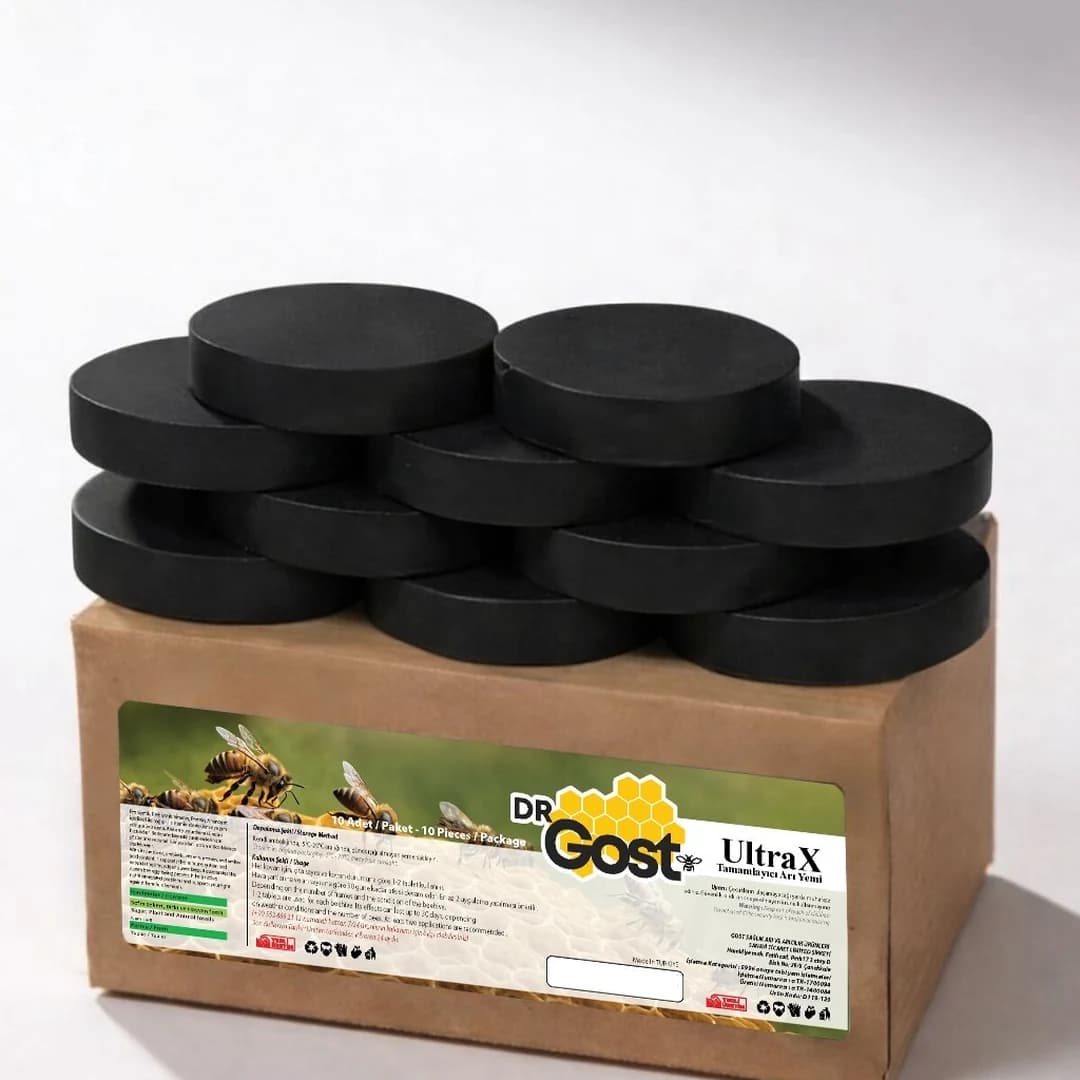
I put Ultrax in the hive myself as the colony goes into winter. It is Vita and Bion in solid form — hard sugar, ten to a pack — so it stays put without chilling the way syrup does, and the block takes up moisture from the air around it as well. It is the feed I rely on most at wintering.
Early spring: is it alive?
When the temperature goes above zero, usually in March, the real test starts. Do not rush to open. A lid lifted too early chills a colony with nothing to spare.
1. Look from outside. Is anything moving at the entrance on a sunny day? A few bees is a good sign. Nothing at all is a sign too.
2. Knock and listen. A light knock should bring a hum that rises and settles. Silence is also an answer.
3. Open only above 10 °C. And at midday, not in the morning. Look for eggs, open brood, and a queen at work.
4. Feel the frames. The commonest sentence in March is "but I fed in the autumn". A long winter eats it. Light frames mean feed now, not next weekend.
5. Measure the mites. Do not estimate — measure. Alcohol wash or sugar shake.
Write down what you see. "Hive 3, 8 March, medium, three frames of bees, low stores" takes four seconds in March and is your whole season plan in May.
Feeding bees: what a colony actually needs
Carbohydrate is fuel: honey or sugar. It keeps the heat on and the colony going.
Protein is building material, and it comes from pollen. That is the part missing in March: the queen has started laying, and there is nothing to forage yet.
Minerals and vitamins are the third leg, and you do not see them until they are absent.
The commonest misconception is that honey in the frames means everything is fine. Honey is energy. It is not protein. A colony can be full of feed and still stall, because it has nothing to build brood out of.
What the shortage does:
- The queen cuts back, because a colony will not build what it cannot feed.
- The brood that is raised comes out weaker.
- And a weak, under-fed colony handles every other pressure worse — mites included.
Syrup or honey?
Syrup is cheap and simple, but the bees have to work on it, and in the cold it chills in the hive.
Honey is natural — but only your own. Honey from elsewhere is one of the surest ways to bring American foulbrood into an apiary. It is never worth it.
In practice: weigh first. Below 8–10 kg remaining, a colony is at risk. Early in the spring, while it is still cold, we give solid feed — foderdeg or a tablet — directly over the cluster. The only feed that counts in March is feed the bees can reach without leaving the warmth.
The commonest mistake we see: liquid syrup at ten degrees. The bees do not come out to it, it stands there, and the hive goes damp. Solid feed removes the whole problem.
Bee feed and supplements: what we give, and when
Sugar gives energy. It gives nothing else. That is why we use supplements, and in the end why we started importing them.
Protein and vitamins
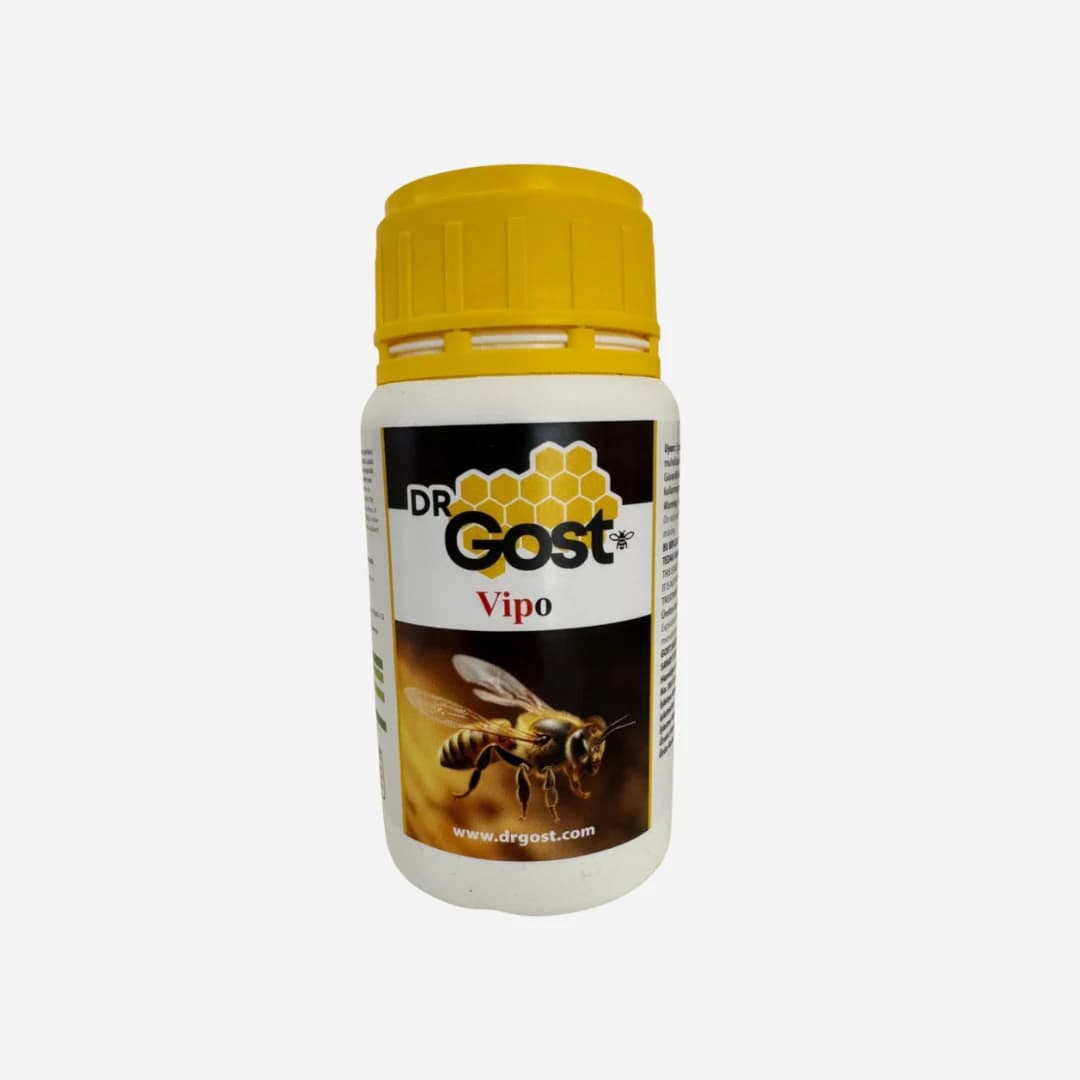
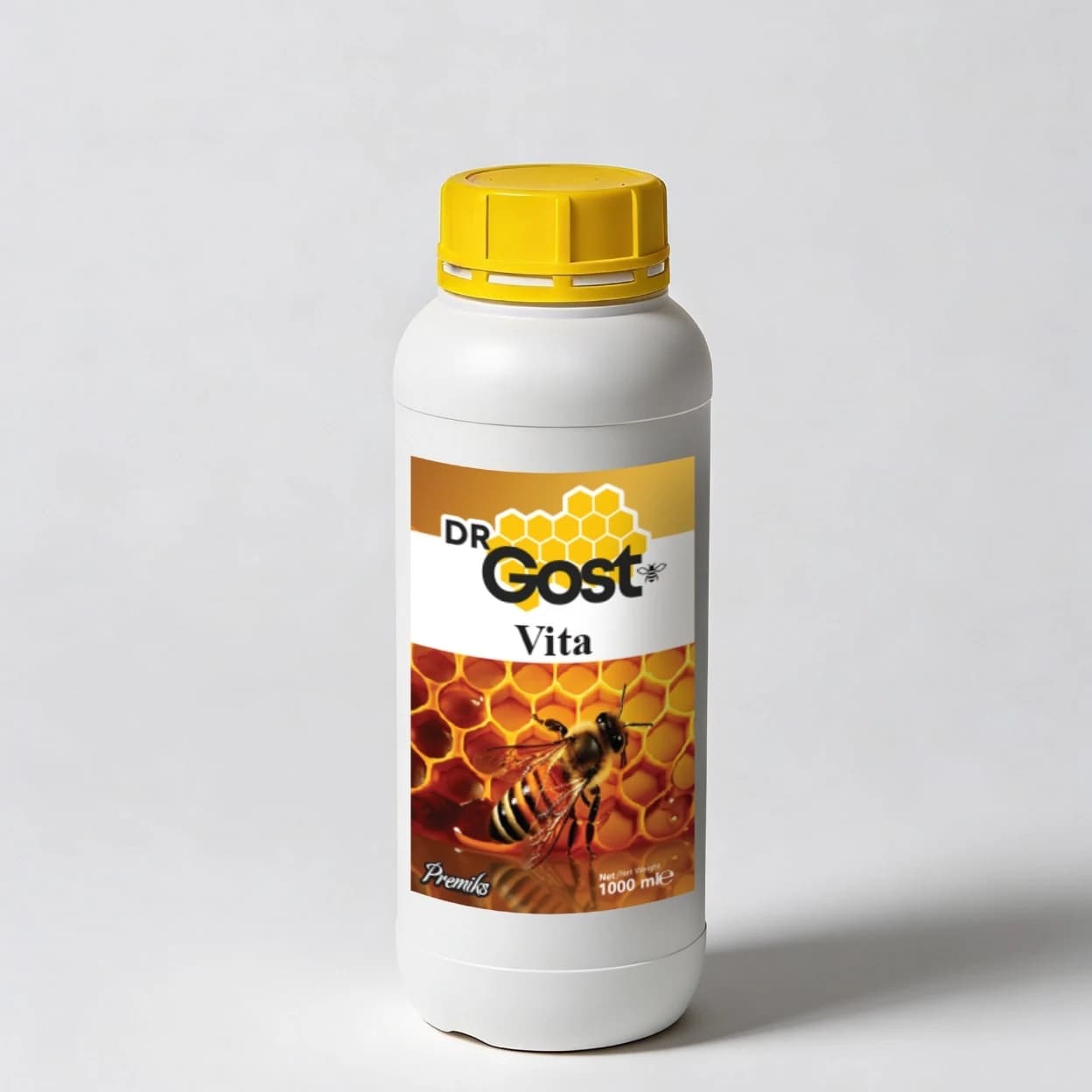
Vita is the base in the bucket here: vitamins, minerals and amino acids — protein already broken down into the form a bee can use. ViPo is the same idea as a powder, with prebiotics, and it can also be sprinkled on fondant.
The queen lays according to what the colony can feed. If the protein is inside the hive, the bees do not have to go looking for it outside during a cold week in April.
The gut
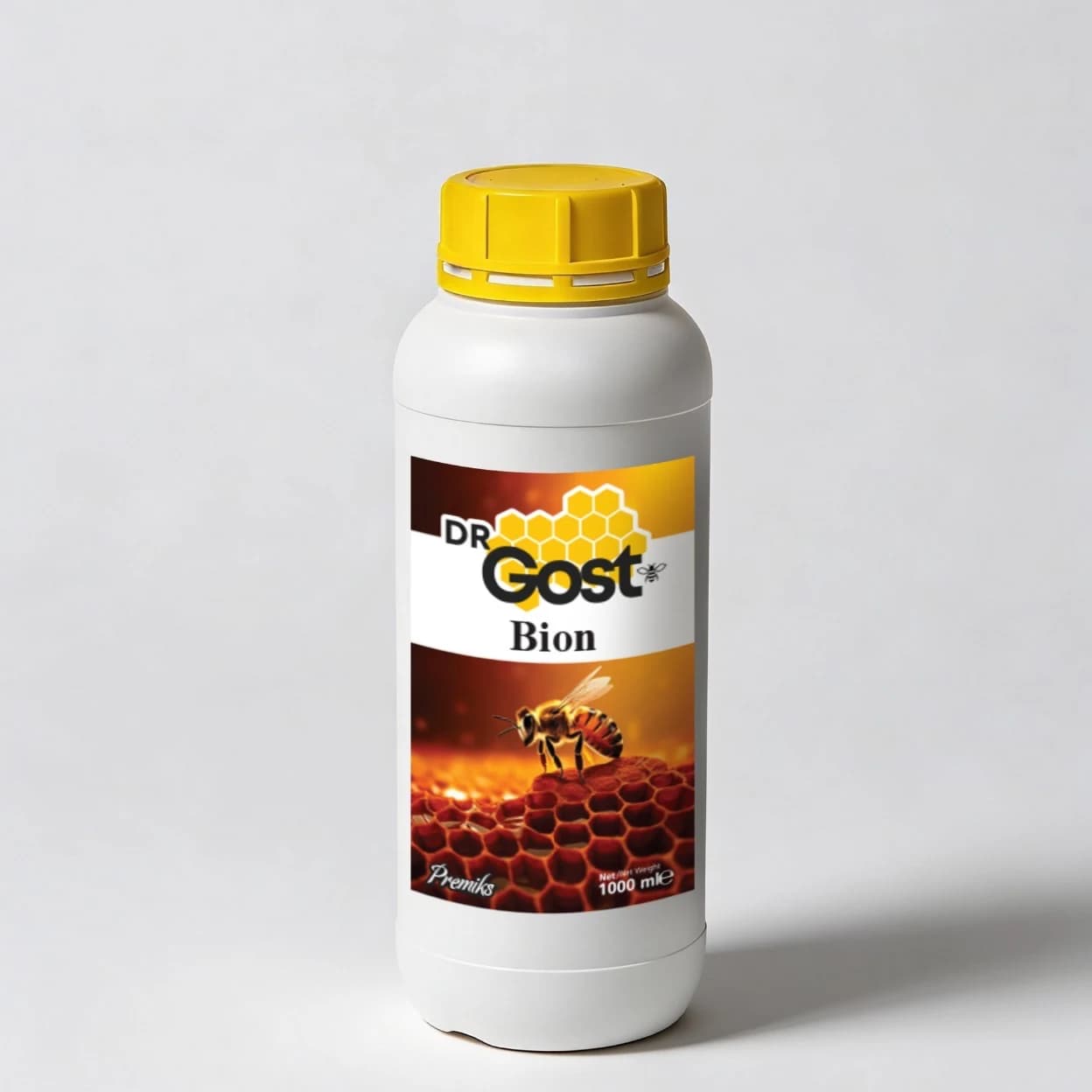
A bee has a gut flora much as we do, and five months shut in takes its toll on it. Bion is the liquid probiotic — probiotika till bin, Bionix the same cultures absorbed into hard sugar.
The commonest mistake with probiotics is timing: many give them once the flow is already on. The window that matters is late February into early March, while the colony is still small and everything you give grows with it.
⚠️ Never into hot syrup. Below 30–40 °C. Heat destroys live cultures and enzymes, and freshly mixed syrup is hotter than it looks.
The enzymes
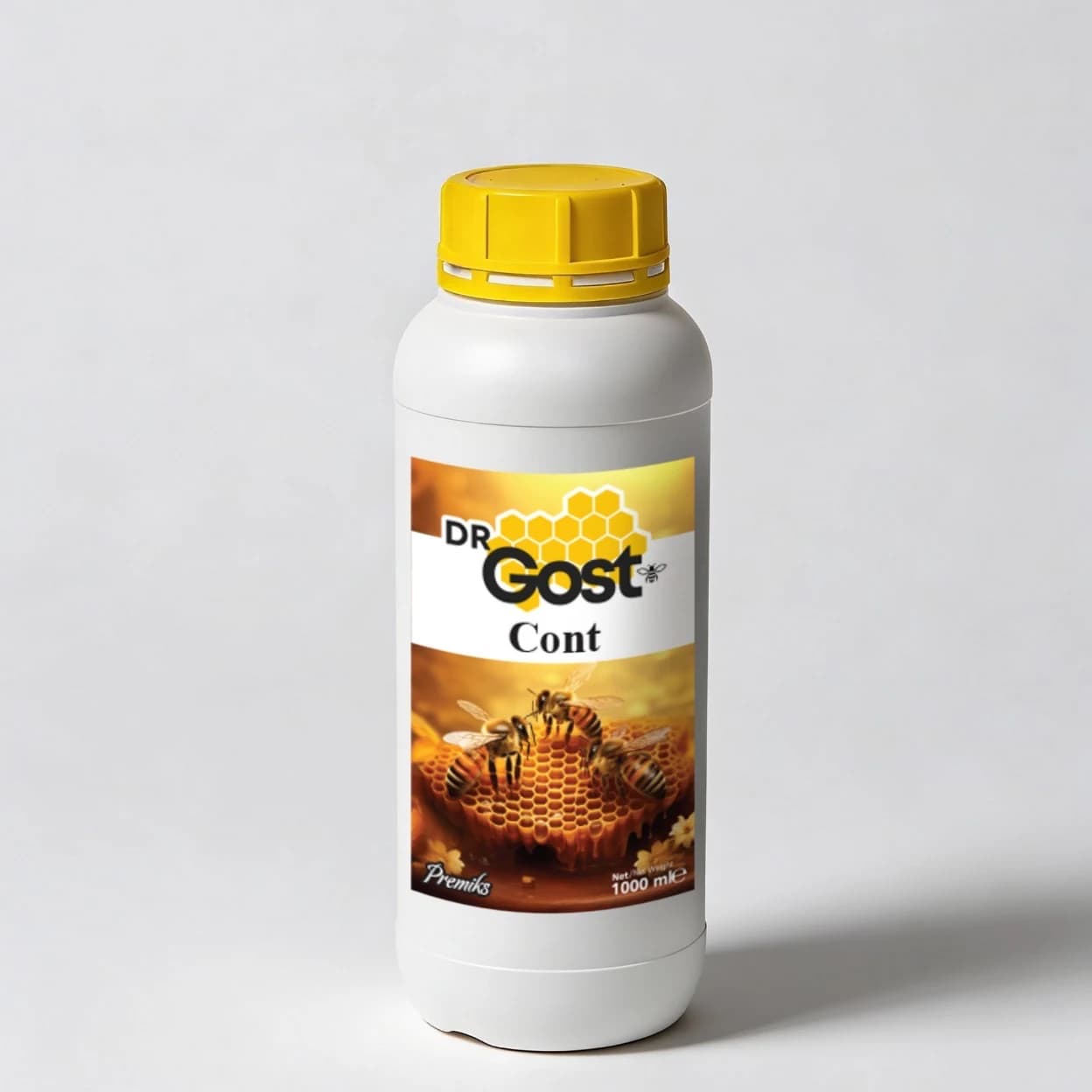
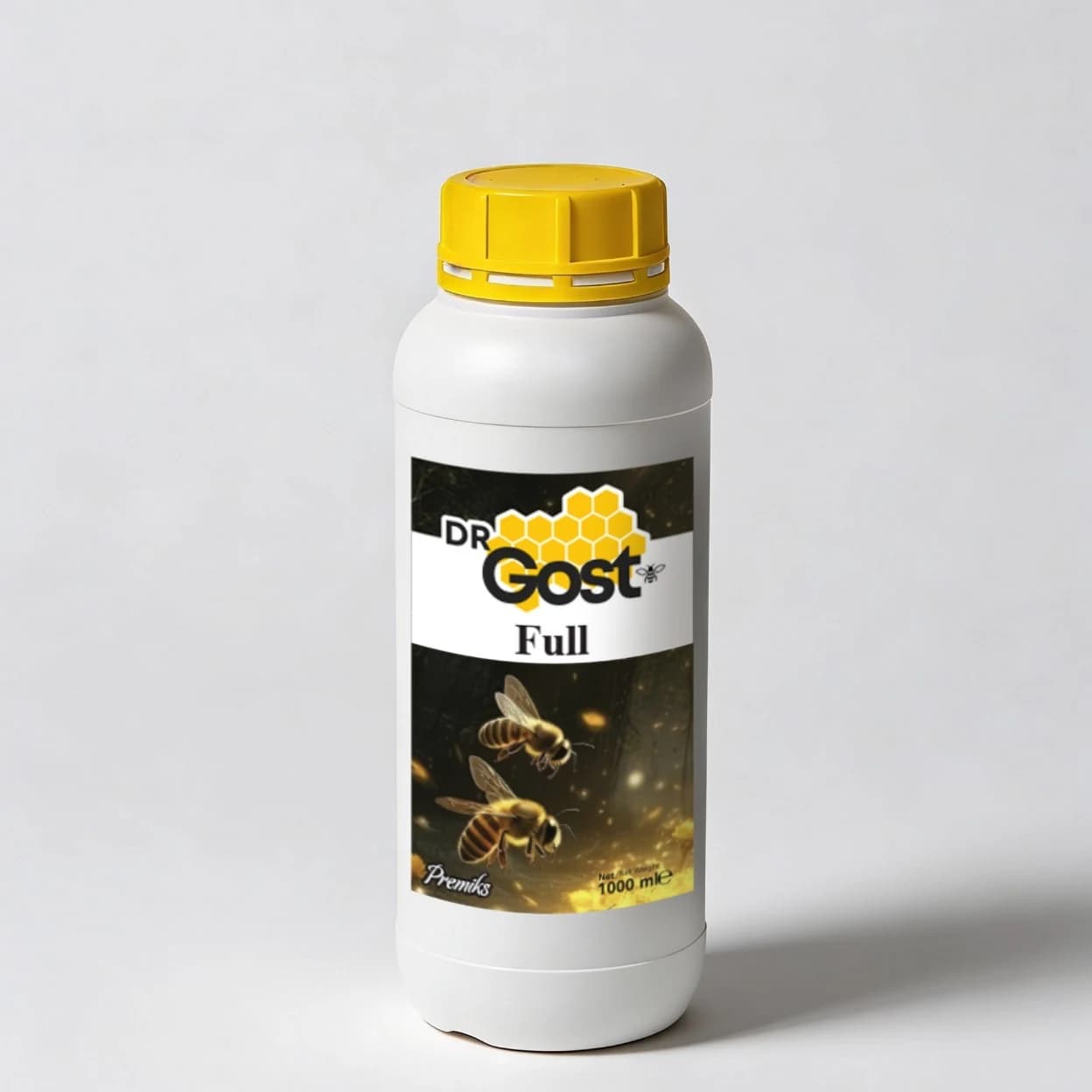
Cont breaks the syrup down to invert sugar before the bees take it in — the work is already done by the time it reaches the frame. Full is Vita, Bion and Cont in one bottle, for anyone who would rather not stand there with three.
Our own spring protocol
Late February — look. A mild day above +6 °C, quickly. How big is the cluster? The smallest colony gets fed first. Feeding without looking is guessing with money.
Early March — wake it up. We mix syrup and add Vita, Bion and Cont. One 1.25-litre bottle of each covers roughly 65 litres of syrup — the worked figure is on every product page.
In real cold, when the nights are still below zero, we give little and often: lukewarm, in a freezer bag, about 200 ml per hive straight onto the frames. It should be gone in a day or two. If it stands, you gave too much.
It goes into a ready bucket of Bifor as happily as into syrup you boil yourself. The additive does not care where the syrup came from.
We filmed the whole autumn feeding start to finish — one bucket of Bifor and four supplements in order. And what is actually in that bucket, and what is not, is in our piece on Bifor.
March — protein over the frames. Pollen patty — pollenkaka, the protein feed — directly on the frames, check weekly, replace it when it is gone. Watch the damp; a cake that goes wet does nothing. The tablets — Vitax, Bionix, Fullix, Ultrax and Resetix — are hard sugar in solid form, ten to a pack, and go under the names bee cookie and vinterbikaka as well. They have a second use here: a block of hard sugar draws moisture out of the air around it.
Throughout — correct it. "I put some in once" is not a protocol. The temperature swings and consumption swings with it. Go round once a week.
We keep temperature, humidity and weight sensors in our own hives and get an alert on the phone when something moves fast. It is not a requirement for doing this well, but it did stop us guessing.
Mites and feeding are one subject
Varroa and feeding get discussed as two topics. They are one. A colony that goes into winter under-fed carries the mite load worse, and a colony that carries the mite load badly comes out of winter weakened. It goes round.
Measure, do not estimate. Alcohol wash or sugar shake. Above three mites per hundred bees it is time to act.
The treatment is its own matter. In Sweden oxalic acid is the usual route, and the preparations authorised for bees are medicines — your beekeeping association and Jordbruksverket are the way in, not an article. Here is what we do in our own apiary, and that is exactly what it is, our own practice: on a day above 13 °C we dissolve 35 g of oxalic acid dihydrate in a litre of lukewarm drinking water with two tablespoons of sugar, shake it in a PET bottle until it has all gone, and trickle — dribble, in the usual English — about 5–6 ml into each seam with a syringe while the solution is still lukewarm. Then the lid goes back on and we are done.
The window that makes the difference is when there is no capped brood. The mites are then on the bees instead of hidden in the cells, and the same treatment does far more. Late autumn or very early spring, in other words.
Before and after is where the supplements belong. A colony that goes into a treatment in good condition and is supported on the way out takes more from it than one that was already exhausted. The oxalic acid does its work; feed and supplements are what let the colony get through it and come back up. That is not a treatment, and we do not sell it as one.
The beekeeper Soner Güner points at a common mistake in the same stretch of the year: opening the hive too early in spring and exposing it to the cold. Wait for ten degrees — and if you want to give something before that, give a tablet or cake over the frames rather than lifting frames out.
⛔ And to be plain about it: the Dr. Gost products are feed and hive care. They are not medicines, they are not pest-control products, and we do not claim they prevent, treat or cure any disease. We do not claim that anywhere on this site.
Hive care, which is a different thing
Ticks and Okalix are strips carrying aromatic plant oils. The pre-comb spray and the hive-to-hive spray are for when you change frames or move between hives — the combs are accepted sooner and cleaned up faster. It saves time in spring, without chemistry.
Eight things to do now
1. Open on a calm, mild day at midday. A short visit. You will not see everything, but you will not chill the colony either.
2. Weigh before you judge. A light hive is a hungry hive. Cake or tablet in the cold, syrup once it has warmed.
3. Shrink the space to the bees, not the other way round. A small colony heats a small box. Shake off frames that barely carry bees.
4. Dose supplements to the label. More is not better.
5. Take the damp seriously. It is more dangerous than the cold.
6. Read the brood pattern. A patchy pattern may be a failing queen — but wait a few days before deciding.
7. Write it all down. What you gave, which day, which hive.
8. Unite rather than lend. Do not take frames from a strong colony to prop up a weak one. Unite the weak into the strong. The first year's goal is not a lot of honey — it is healthy colonies.
What it costs, at a small scale
Count per hive, not per apiary. Feed, supplements, mite checks and replacing material, separately, and set aside a fixed "spring start" figure per colony.
Cheap feed looks cheap until you count what a lost colony costs — the hive, the queen, and a season that did not happen.
Six hives? Run it as a trial. Three on ordinary feeding, three with supplements. Compare in May. It is the cheapest evaluation there is, and you do not have to take anyone's word for it — ours included.
The commonest mistakes
"Bees eat less in a cold country." The opposite. They spend for months with no way to top up.
"More syrup is better." More syrup in the wrong weather gives damp, mould and robbing.
"Supplements whenever I remember." The window is late February into March. The same product in May does a fraction of the good.
"It looks fine." Mites do not show on a hive that looks fine. Measure.
"But I fed in the autumn." That sentence has cost more colonies than the cold has.
Finally
Nordic beekeeping is not harder. It is less forgiving, and it moves everything that matters into two short windows: the wintering, and the three weeks when it turns.
Get those two right and the rest of the season largely runs itself. And if you have two or three hives you have an advantage no commercial beekeeper has — you can look at every colony individually. Regular attention in the right week is worth more than any equipment you can buy.
The range we use is in the shop. We import it ourselves, we use it in our own hives, and you are welcome to ask us about any of it.
Frequently asked questions
How much feed does a colony need to go into a Nordic winter?
Roughly 15–20 kg of stored feed. Weigh the hive rather than estimating — a hive scale is the cheapest insurance available, and the commonest spring sentence is "but I fed in the autumn", which a long winter eats through.
What is hungergapet?
The gap in late winter and early spring when the colony has started raising brood and spending stores, but nothing is flowering outside yet. It is the commonest trap in a Nordic climate, and it is why late February into March is the window that matters for feeding.
When can I open the hive in spring?
At ten degrees or above, and at midday rather than in the morning. A lid lifted too early chills a colony that has nothing to spare. Before that you can judge a great deal from outside: movement at the entrance, and a light knock that should bring a hum that rises and settles.
Syrup or solid feed in early spring?
Solid — cake or tablet — placed directly over the cluster. At ten degrees the bees will not leave the warmth to reach liquid syrup, so it stands there and the hive goes damp. The only feed that counts in March is feed they can reach without leaving the cluster.
Can I feed my bees honey?
Only your own. Honey from anywhere else is one of the surest ways to bring American foulbrood into an apiary, and it is never worth the risk.
Honey is energy — so why does a colony need protein?
Because energy is not building material. Protein comes from pollen and is what brood is made of. A colony can have frames full of honey and still stall in March, when the queen has started laying and there is no pollen to forage yet.
Why must supplements never go into hot syrup?
Heat destroys live cultures and enzymes. Keep it below 30–40 °C, and remember that freshly mixed syrup is considerably hotter than it looks.
When is oxalic acid most effective against varroa?
When there is no capped brood — late autumn or very early spring. The mites are then on the bees rather than hidden in the cells, so the same treatment does far more. The preparations authorised for bees are medicines; your beekeeping association and Jordbruksverket are the route, not an article.
Are the Dr. Gost products a varroa treatment?
No. They are feed and hive care. We do not claim they prevent, treat or cure disease, and we do not present them as pest-control products. Around a treatment they are what helps a colony go in in good condition and come back up afterwards — the treatment itself is a separate, authorised product.
This is written by a working apiary, not an agency
Buzzin’ Bees is in Svinninge. We sell the honey our own hives make, and the Dr. Gost supplements we bring into Sweden.