Vinterfoder till bin: hur mycket, när och hur du utfodrar inför invintringen
Av Adam M Akkemik — biodlare i Svinninge · Jordbruksverket · Biodlarna Stockholm
Invintringen avgör vintern. Hur många kilo vinterfoder ett normalstarkt samhälle behöver, varför du börjar direkt efter slutskattningen, varför tunn sockerlösning i september är ett misstag, vilken fodrare du väljer — och när du slutar.
Invintringen är det viktigaste du gör under hela biodlingsåret, och den görs på några veckor i augusti och september. Nästan allt annat går att göra om nästa säsong. Ett samhälle som går in i vintern med för lite vinterfoder — eller med foder som bina aldrig hann ta ner och täcka — får inget nytt försök.
Den här texten handlar om utfodringen: hur många kilo ett samhälle behöver, när du börjar, vad du ger, hur du ger det och när du slutar. Resten av invintringen — musskydd, ventilation, drottningen, varroa — står i Invintring i nordiskt klimat.
Fyra ord som inte betyder samma sak
Invintring är hela höstförberedelsen: slutskattning, varroabehandling och vinterfodring. Alltombiodling.se beskriver tidpunkten rakt: vinterfoder ges när draget av nektar och pollen avtar i naturen på hösten, och i praktiken sker invintringen under augusti eller september beroende på var i landet du är.
Bifoder är samlingsnamnet för allt du ger samhället som inte kommit från draget — sockerlösning, färdigblandat foder, foderkakor.
Vinterfoder är det bifoder som ska räcka från oktober till maj.
Sockerlösning är själva blandningen av socker och vatten, och sockerlag är samma sak i det ord som de flesta produktetiketter använder.
Hur mycket vinterfoder behöver ett samhälle?
I kilo, och räknat mot det som redan finns i kupan.
- Ett normalstarkt bisamhälle: omkring 20 kilo vinterfoder inklusive den honung du lämnar kvar. Så uttrycker alltombiodling.se det, och det är den siffra de flesta svenska biodlare arbetar mot.
- Biodlarna anger minst 15 kilo socker. Ett golv, inte ett mål.
- 20–25 kilo om samhället invintras på två lådor. Så räknar Mariestads biodlarförening, som också noterar att många därför ger 1,5 hink Bifor — omkring 18 kilo — utöver de täckta honungsramar som redan sitter i yngelrummet.
- På en låda räcker ungefär 16–18 kilo, men då måste du vara desto mer uppmärksam på foderbrist i mars och april.
Räkna av det som redan finns. En LN-ram full med täckt honung väger ungefär 2 kilo, en HLS-ram ungefär 1 kilo. Sex fulla LN-ramar är alltså omkring 12 kilo — och det du är skyldig samhället är resten, inte tjugo till.
Och fyll inte hela lådan. Bina behöver tomma celler att sitta i för att vinterklotet ska fungera. Ett samhälle som fodrats tills varje cell är full har fått mat och förlorat sitt vinterläger.
Tidpunkten är halva jobbet: börja direkt efter slutskattningen
Det här är den dyra missen, och den handlar inte om mängd. Den handlar om datum.
Bina tar inte bara emot fodret. De ska bära ner det, avdunsta vattnet ur det, invertera sockret och täcka cellerna. Det arbetet kräver värme och tid. Mariestads biodlarförening säger det kort: invintra tidigt, dels för att bina ska hinna lagra fodret där de själva vill ha det, dels för att det är betydligt lättare för dem att få ner vattenhalten till omkring 20 procent medan det fortfarande är varmt ute. Från mitten av september är nätterna oftast för kalla för den saken.
Alltså: skatta av, behandla mot varroa, och börja vinterfodra. I mellersta Sverige innebär det att fodringen ska vara avklarad under september. Fodrar du i oktober har du gett samhället en hink vätska det inte kan göra något vettigt med.
Det finns ett andra skäl att inte vänta. Det är just nu drottningen lägger de bin som ska leva vintern — vinterbina, som lever fem till sex månader i stället för några veckor. De ska födas upp i ett samhälle som har foder och pollen, inte i ett som väntar på biodlaren.
Varför tunn sockerlösning i september är ett misstag
Två olika lösningar med två olika syften blandas ihop hela tiden.
Tunn sockerlösning — ungefär lika delar socker och vatten — är drivfodring. Den hör våren till, ges i små mängder, och dess budskap till samhället är att ett drag har börjat.
Vinterfoder är tjockt. Den svenska standarden är en 60-procentig sockerlösning: tre delar socker till två delar vatten, räknat i vikt. Det är den blandning alltombiodling.se och de flesta svenska föreningar anger för invintring.
Ger du tunn lösning i september ber du samhället att avdunsta ungefär dubbelt så mycket vatten, vid den tid på året då det är som svårast. Följderna är förutsägbara: otäckt foder som jäser, extra fukt i kupan just när fukten är det största nordiska problemet, och en drivsignal till en drottning som är veckor från att sluta lägga.
Två saker till om blandningen:
- Koka inte. Varmt vatten löser sockret; omkring 50 grader räcker gott. Kokning bildar HMF, som är giftigt för bin.
- Använd vanligt vitt strösocker. Inte råsocker, inte farinsocker, inte melass. De innehåller ämnen bina inte kan smälta, och resultatet blir utsot under fem månaders inneslutning.
Blanda själv eller köpa färdigt
Båda vägarna är normala i Sverige. Alltombiodling.se sätter en siffra på var och en: ungefär 18 kilo socker per samhälle om du blandar själv, eller 1,5 hink Bifor om du köper färdigblandat.
Skillnaden som spelar roll är vattnet. En normal sockerlösning innehåller omkring 40 procent vatten. Bifor innehåller 25 procent, eftersom det är ett inverterat socker som kommer färdigblandat — bina lägger alltså mindre energi på att avlägsna vatten.
Bifor får en egen artikel, eftersom vad som finns i hinken och vad som inte finns i den är värt att veta innan du häller: Bifor: vad som faktiskt finns i hinken.
Sockerlösning till bin: blandningstabell
Räknat i vikt, eftersom det är så procenten anges. En liter vatten väger ett kilo, så vattnet kan mätas upp i liter.
| Blandning | Socker | Vatten | Ger ungefär |
|---|---|---|---|
| Vinterfoder 60 % (3:2) | 3 kg | 2 liter | 3,9 liter |
| Vinterfoder 60 %, 10 liter färdig lösning | 7,7 kg | 5,2 liter | 10 liter |
| Vinterfoder 60 %, ett samhälles behov | 18 kg | 12 liter | 23 liter |
| Drivfodring på våren, 50 % (1:1) | 1 kg | 1 liter | 1,6 liter |
Lösningen tar mindre plats än sockret och vattnet gjorde var för sig, eftersom sockret löser sig i vattnet: ett kilo socker lägger till ungefär 0,6 liter.
Ättika eller citron i sockerlösningen?
Ett gammalt hemmaknep är att hälla i lite ättika eller citronsaft. Syran sänker pH-värdet, och tanken är att sockret ska börja spjälkas — inverteras — redan i hinken, så att bina slipper en del av jobbet.
Vi gör inte så. I en ljummen lösning händer mycket lite under de dagar det tar bina att ta ner fodret, och värmer du lösningen med syra för att få fart på det bildas HMF — samma ämne som gör kokt sockerlösning giftig för bin. Att invertera sockret klarar bina själva, med enzymet invertas. Det är det arbetet som kräver värme och tid, och därför är det datumet, inte receptet, som avgör invintringen.
Så blandar vi
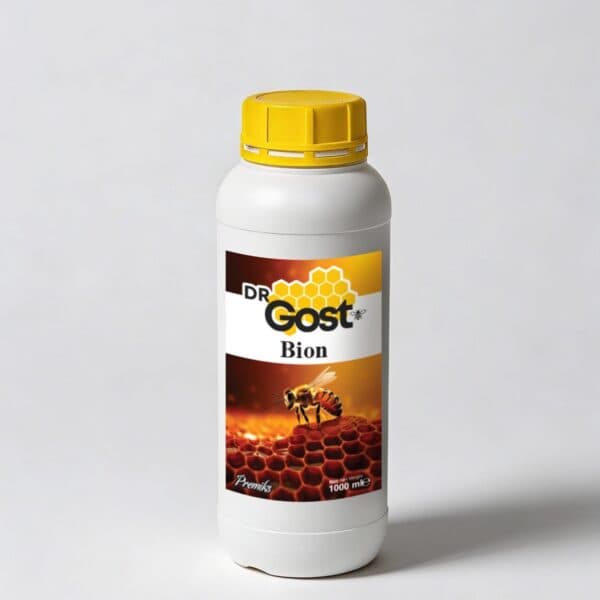
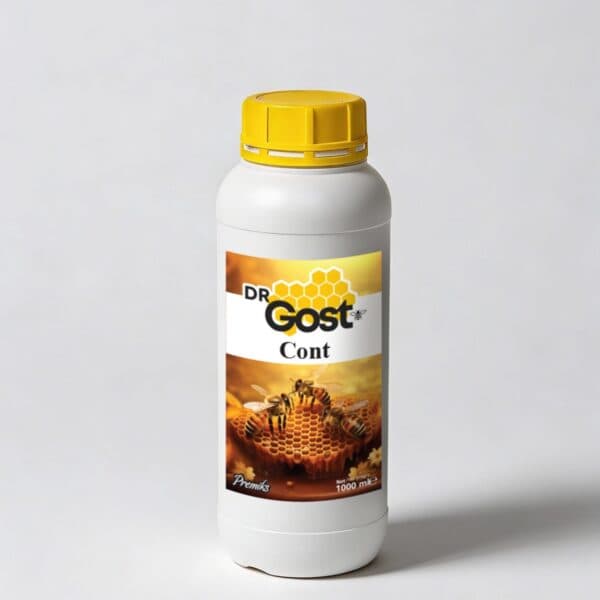
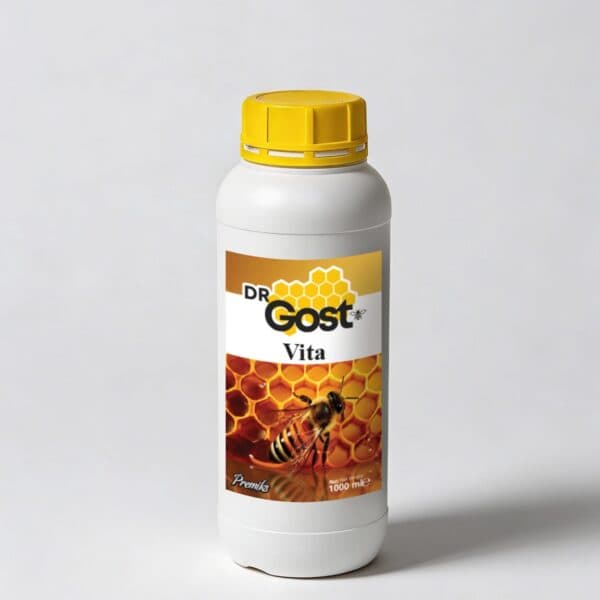
När sockerlösningen har svalnat rör vi ner tre kompletteringsfoder från Dr. Gost, ungefär 2 dl av vart och ett per 10 liter lösning:
- Vita — vitaminer och aminosyror i flytande form.
- Cont — hjälper till att reglera binas tarmflora och stödjer matsmältningen när samhället tar ner stora mängder foder.
- Bion — probiotiska kulturer för tarmfloran.
Det blir 20 ml per liter av vart och ett, inom etiketternas 10–25 ml. Vänta tills lösningen är ljummen: Bion innehåller probiotiska kulturer, och dem ska man inte värma.
Tillskotten ändrar ingenting av det som står ovan. De gör inte en tunn lösning till vinterfoder, och de flyttar inte datumet.
Fodrare
Redskapet spelar mindre roll än tidpunkten, men det avgör hur mycket du kan ge åt gången och hur ofta du måste öppna kupan.
- Foderhink eller plastfodrare över täckbrädans foderhål. Rymmer mycket. En Bifor-hink har perforerat lock, så förpackningen är fodraren.
- Foderlåda — en tom sarg med fodertråg. Störst volym och färst öppningar; också det tyngsta du bär den månaden.
- Foderpåse och foderballong — billiga och enkla, bra för mindre givor.
- Ramfodrare som ersätter en ram i yngelrummet. Bra för svaga samhällen och avläggare, och lägre röveririsk. Se till att det finns ett flöte eller nät i, annars drunknar bina.
Ge stora givor till starka samhällen. Varje extra öppning i september kostar samhället värme och kostar dig risken att starta ett röveri.
Röveri är höstens andra risk
Flera samhällen som fodras i samma bigård är en inbjudan. Minska flusteröppningarna, spill inte sockerlösning på marken eller längs kupan, täck över exponerade ramar och arbeta snabbt. Ett svagt samhälle som blir utplundrat i september dör inte i september. Det dör i februari.
Honung du inte ska invintra på
Invintrar du helt eller delvis på honungsramar: undvik ljunghonung och bladhonung. Båda ökar risken för utsot under den långa inneslutningen. De skattas bort och samhället får sockerlösning i stället.
Och en regel utan undantag: sockerlösning får aldrig ges till en kupa med skattlådor avsedda för skörd. Det blir falsk honung, och det är det fusket som skadar varenda ärlig biodlares marknad.
Vad som aldrig går i fodraren
- Honung från okänd källa. Butikshonung och honung från andra biodlare kan bära sporer av amerikansk yngelröta. Sporerna överlever i honung i årtionden, och en burk kan kosta dig hela bigården. Det är olagligt att ge i Sverige av precis det skälet.
- Råsocker, farinsocker, melass.
- Juice, läsk och annat sötat.
Socker är inte pollen
Sockerlösning är energi. Protein kommer från pollen, och inget vinterfoder ersätter det. Proteinet bygger fettkroppen hos vinterbina, och fettkroppen avgör om de håller i fem månader. Aminosyrorna i Vita ändrar inte på det: ett tillskott i sockerlösningen är ingen pollenreserv.
Pollenreserven i kakorna är också en del av invintringen, och det är den del du inte kan hälla ur en hink. Proteinsidan av året, och vårens pollenglapp, står i Vårutveckling: stötta och fodra samhället efter vintern.
När du slutar
När vikten är inne och fodret är täckt. Lyft kupan bakifrån och lär dig hur ett färdiginvintrat samhälle känns i händerna — det är den mätningen du kommer att göra i februari, i mörker, utan att öppna något.
Efter det är flytande foder inte längre ett alternativ. Från november och framåt är det foderkaka eller fondant på ramlisterna som gäller, och det är en nödåtgärd, inte en plan.
Tillskotten från sockerlösningen finns också i fast form, pressade till tabletter som ges utan att blandas i något foder: Vitax motsvarar Vita, Bionix motsvarar Bion, och Ultrax är de två tillsammans.
Nöden kan komma även till ett välfodrat samhälle: honung som har kristalliserat i kakorna är svår för bina att använda i sträng kyla, eftersom de behöver vatten för att lösa upp den. Därför lägger vi tabletterna i kupan bredvid foderkakan innan vintern stänger in samhället, så att de finns där om det blir nöd — en eller två per kupa, som etiketten anger.
Se det i praktiken
Engelskt tal · svensk & turkisk text
Videon hämtas från YouTube (Google) när du trycker.
Vanliga frågor
Hur mycket vinterfoder behöver ett samhälle?
Omkring 20 kilo vinterfoder för ett normalstarkt samhälle, räknat inklusive den täckta honung du lämnar kvar. Biodlarna anger minst 15 kilo socker som golv; Mariestads biodlarförening räknar 20–25 kilo för ett samhälle på två lådor, och en enda låda klarar sig på ungefär 16–18 kilo men måste då bevakas noga mot foderbrist i mars och april. Räkna av det som redan finns — en full LN-ram med täckt honung väger ungefär 2 kilo.
När ska man invintra?
Direkt efter slutskattningen, vilket i praktiken betyder augusti eller september beroende på var i landet du är. Bina ska bära ner fodret, avdunsta vattnet ur det, invertera sockret och täcka cellerna, och det arbetet kräver värme och tid — därför spelar datumet större roll än mängden.
Hur stark ska sockerlösningen till invintring vara?
Tjock. Den svenska standarden för invintring är en 60-procentig sockerlösning — tre delar socker till två delar vatten, räknat i vikt. Tunn lösning, ungefär lika delar socker och vatten, är drivfodring och hör våren till: given i september ber den samhället att avdunsta ungefär dubbelt så mycket vatten vid årets svåraste tidpunkt, och följden blir otäckt foder som jäser och extra fukt i kupan.
Får man koka sockerlösningen?
Nej. Varmt vatten löser sockret och omkring 50 °C räcker gott; kokning bildar HMF, som är giftigt för bin. Använd vanligt vitt strösocker — inte råsocker, farinsocker eller melass, som innehåller ämnen bina inte kan smälta och ger utsot under fem månaders inneslutning.
Ska man ha ättika eller citron i sockerlösningen?
Det är ett gammalt hemmaknep: syran sänker pH-värdet, och tanken är att sockret ska börja spjälkas — inverteras — redan i hinken. I en ljummen lösning händer mycket lite under de dagar det tar bina att ta ner fodret, och värmer du lösningen med syra för att få fart på det bildas HMF, som är giftigt för bin. Bina inverterar sockret själva med enzymet invertas, och därför spelar det större roll när du börjar fodra än vad du blandar i. Vi tillsätter ingen ättika.
Får man ge butikshonung eller honung från en annan biodlare?
Nej, och det är olagligt i Sverige av precis det skälet: honung från okänd källa kan bära sporer av amerikansk yngelröta, sporerna överlever i honung i årtionden, och en enda burk kan kosta dig hela bigården.
Ersätter sockerlösning pollen?
Nej. Sockerlösning är energi; proteinet kommer från pollen, och inget vinterfoder ersätter det. Proteinet bygger fettkroppen hos vinterbina, och fettkroppen avgör om de håller i fem månader.
Det här skrivs av en bigård, inte av en byrå
Buzzin’ Bees ligger i Svinninge. Vi säljer honungen våra egna kupor gör, och Dr. Gost-tillskotten vi tar in till Sverige.