Vår juliskörd: En morgon i bigården i Svinninge
Av Adam M Akkemik — biodlare i Svinninge · Jordbruksverket · Biodlarna Stockholm
Vi var uppe innan trädgården vaknade och lyfte tunga skattlådor i svalkan av en julimorgon. Så här doftade och kändes vår sommarskörd — och vad vi valde att lämna kvar åt bina.
Väckarklockan ringde halv fem. Det finns inget vänligt sätt att säga det — julimorgnar med skörd är tidiga, och det är hela poängen. Vi drog på oss stövlarna i halvljuset, kaffet svalnade på trappen, för bina hade tillbringat hela natten med att göra det enda vi inte kan: torka ner honungen åt oss.
Varför så tidigt
Under ett bra sommardrag stiger vattnet i en öppen skattlåda märkbart efter lunch. En varm eftermiddag känns ramarna nästan fuktiga av färsk nektar. Men under natten fläktar bina med vingarna och driver ut fukten, och i morgonsvalkan är honungen som mognast och torrast. Så vi jobbar i det smala fönstret — ungefär halv sex till elva — och vi lyfter aldrig skattlådor efter regn eller mitt i ett starkt drag. Den här morgonen var stilla, gråguldig och perfekt.
Vi lyfte av skattlådorna från de tre starkaste samhällena. Det finns en särskild värk i det som ingen bok varnar för — en full skattlåda med täckt sommarhonung är tung, tyngre för varje år verkar det, och man bär den framåtböjd och flinande på samma gång. Vi borstade av bina varsamt och lämnade dem muttrande bakom oss.
Doften
Jag önskar att jag kunde tappa på burk ögonblicket då vi bar in de lådorna i det lilla slungrummet och ställde ner dem. Hela Svinningesommaren släppte ur dem på en gång — varmt vax, vitklöver, och den där omisskännliga toppen av lindblom, lindalléerna som ringar in vår bit av ängen. Det är doften av hela säsongen hoptryckt i ett litet, kladdigt rum. Vi stod kvar en sekund längre än vi behövde, bara för att andas in den.
Avtäckning och slungning
Sedan det riktiga arbetet. Vi drog den varma kniven längs varje ram, och täckvaxet lossnade i långa bleka band med honungen vällande bakom. Varje ram vi lyfte gav vi först en bestämd vågrät skakning — det gamla skvätt-testet. Sprutar nektar ut är den för blöt och åker tillbaka. Inget sprutade. Bina hade gjort sitt jobb.
In i slungan, och den långsamma uppbyggnaden när slungan tog fart — det låga centrifugalljudet, honung slungad mot trummans vägg och rinnande ner i långsamma bärnstensfärgade sjok. Vi grovsilade den genom en sil, inget mer. Ingen finfiltrering, ingen värme. Vi håller den rå och ovärmd, för allt som gör den här honungen vår — pollenet, enzymerna, själva ängen — lever i just de delar som en värmare stillsamt skulle döda.
Kontrollen av fukten
Någonstans där stannade vi upp och gjorde det enda test som avgör allt. En enda droppe på refraktometerns prisma, håll den mot fönstret, läs av strecket.
Precis under arton procent. Jag sa det högt, förmodligen alldeles för nöjd med mig själv. Under tjugo är säkerhetsgränsen — över den kan honung jäsa i burken — men under arton är där man vill vara, torr nog att helt enkelt inte kunna förstöras. Alla de tidiga morgnarna, allt det där fläktandet genom den korta nordiska natten, hade landat i det där enda rena talet. Vi kunde tappa den med lätt hjärta.
Vad vi lämnade åt bina
Här är den del som betyder mer än själva skörden. Vi tog inte allt, och det kommer vi aldrig att göra.
Vi lämnade varje samhälle ordentliga tjugo kilo foder på yngelrummet — honung vi kunnat slunga, burkar vi valde att inte fylla. På 59 grader nord möter våra bin något liknande åtta månader instängda i lådan, från augustis sista blommor till aprils första sälg. Tjugo kilo är ungefär vad ett samhälle äter genom det långa mörkret. Överskottet ovanför deras skafferi är vårt. Deras skafferi är det inte.
Det är lätt, stående över en hög täckta ramar, att prata sig till att ta lite till. Vi har gjort det misstaget förr, under våra första år, och tillbringat hela vintern med att ängsligt mata tillbaka det vi girigt tagit. Återhållsamhet, visar det sig, är inte motsatsen till en bra skörd — den är skörden. Ett samhälle som går in i hösten tungt är ett samhälle man knappt behöver oroa sig för.
Tacksamhet, och en full burk
Vid sen förmiddag var vi klara, slungan tömd, golvet ärligt och kladdigt, underarmarna värkande på ett sätt som kändes förtjänat snarare än ömt. Någonstans därute hade var och en av de där bina flugit en livstid av små resor — runt två miljoner blombesök, sägs det, för att fylla en blygsam burk.
Vi tänker på det varje år, och varje år landar det fortfarande. Vi lånar bara överskottet. Bina gjorde allt det riktiga arbetet, genom de korta ljusa veckorna av en svensk sommar, och den här morgonen lät de oss helt enkelt bära hem lite av det. Det känns fortfarande, stillsamt, som en gåva.
Produkter som nämns i artikeln
Du kanske också behöver
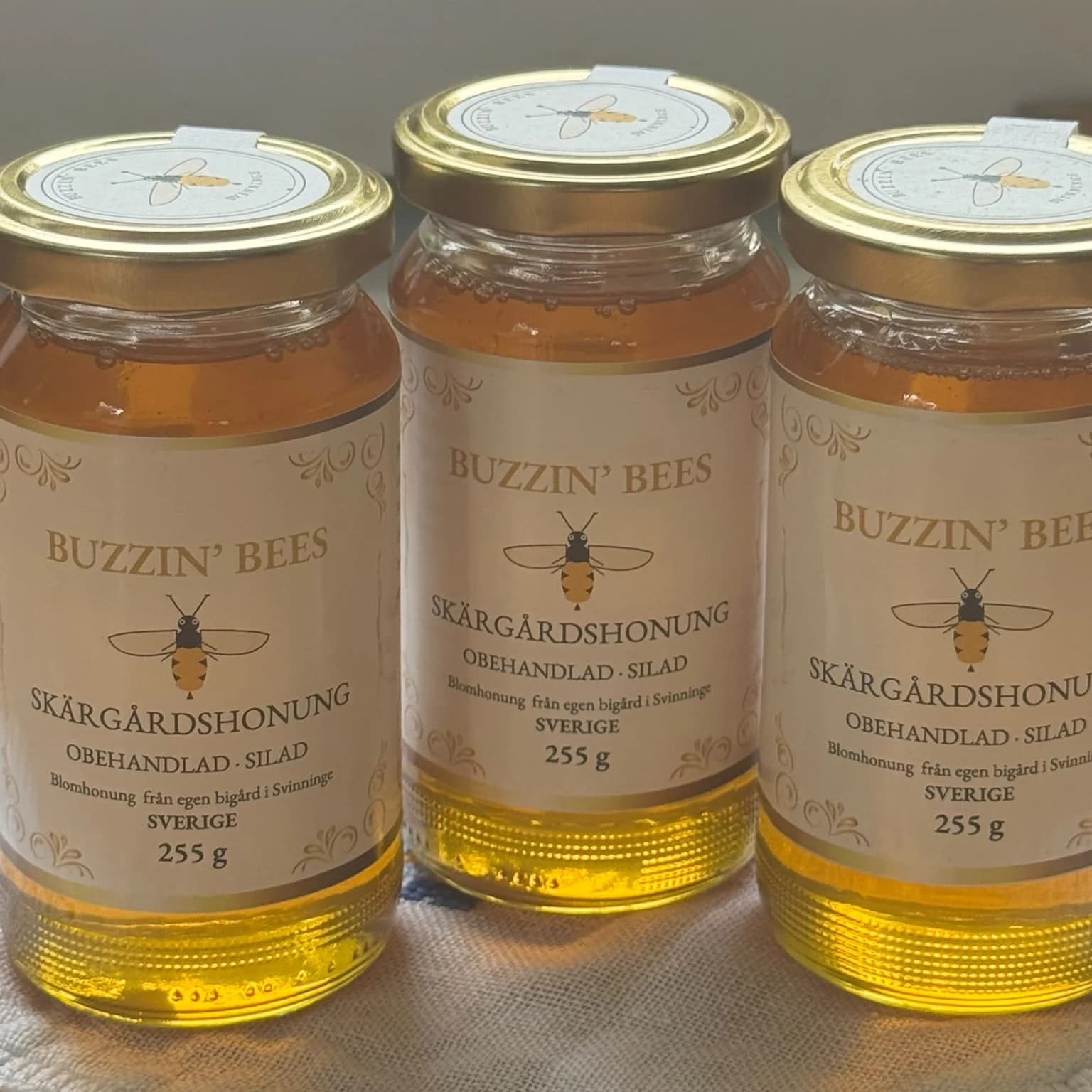
Det här skrivs av en bigård, inte av en byrå
Buzzin’ Bees ligger i Svinninge. Vi säljer honungen våra egna kupor gör, och Dr. Gost-tillskotten vi tar in till Sverige.