Vår första skörd: 18kg sommarhonung från Svinninge
Av Adam M Akkemik — biodlare i Svinninge · Jordbruksverket · Biodlarna Stockholm
Extraktionsrummet doftade av klöver och lindblom. Efter månaders väntan snurrade vi äntligen vår första skörd — och färgen var extraordinär.
Rummet som doftar sommar
Om du aldrig stått i ett rum medan honung slungas är det svårt att beskriva. Varmt vax, vitklöver, en topp av lindblom — hela Svinningesommaren destillerad till ett litet rum. Efter vår första hela säsong slungade vi äntligen vår första skörd, och jag skäms inte för att säga att vi stod där och flinade som barn.
Arton kilo, och en färg vi inte väntat oss
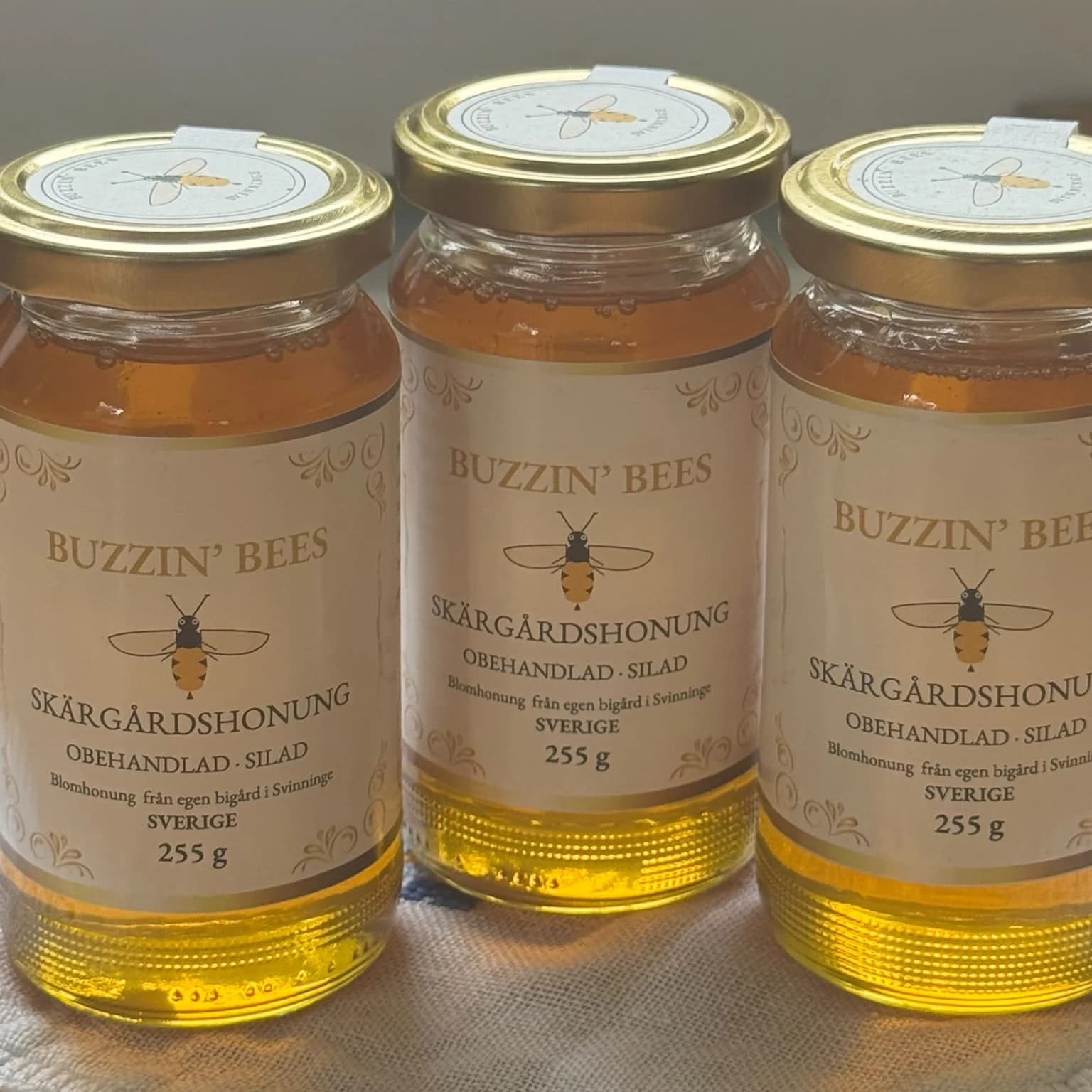
Vi hade hoppats på en blygsam första skörd. Det som kom av ramarna var 18 kilo ljus bärnstensfärgad honung, nästan lysande när man håller burken mot fönstret. Den färgen kommer från vitklövern och lindalléerna som omger bigården — en delikat, blommig honung snarare än en mörk och kraftig. Varje plats smakar av sin egen äng, och nu vet vi precis hur vår smakar.
Så gjorde vi
- Vi tog endast helt täckta ramar — täckt honung är mogen och tillräckligt låg i fukt för att lagras utan att jäsa.
- Vi lämnade rikligt med foder på yngelrummet. Överskottet är vårt; samhällets eget skafferi är det inte.
- Vi kallslungade och grovsilade bara — ingen uppvärmning, ingen finfiltrering — så att pollen, enzymer och arom stannar i burken där de hör hemma.
Återhållsamhet är en del av hantverket
Frestelsen vid en första skörd är att ta allt. Det gjorde vi inte. Ett samhälle som går in i hösten med lite foder är ett samhälle man oroar sig för hela vintern — och matar tillbaka det mesta man tog. Att bara ta det äkta överskottet är inte bara snällare; det är bättre biodling.
En första skörd är en milstolpe man bara får en gång. Arton kilo är ingen affär. Men det är ett bevis på att en bit svensk äng, några lådor bin och ett år av omsorg kan förvandla solljus och klöver till något man kan ställa på frukostbordet. Det är fortfarande, för oss, ett litet under.
Produkter som nämns i artikeln
Du kanske också behöver
Det här skrivs av en bigård, inte av en byrå
Buzzin’ Bees ligger i Svinninge. Vi säljer honungen våra egna kupor gör, och Dr. Gost-tillskotten vi tar in till Sverige.