The Buzzing Hour
Julihonungen: Att läsa mognad i en nordisk sommar
Lyssna på avsnittet
Juli är hjärtat av den svenska honungssäsongen, och att göra skörden rätt handlar om vatten. Vi går igenom hur du vet att honungen verkligen är mogen, varför vi slungar i den svala morgonen, hur vi skattar utan att koka livet ur honungen, och vad vi lämnar kvar till bina inför den långa nordiska vintern.
Juli är när allt faller på plats. Den långa nordiska sommarens ljus har strömmat in i kuporna i veckor, skattlådorna blir tunga, och frågan varje biodlare börjar ställa är densamma: är den klar? I detta avsnitt öppnar vi upp vår egen skörd här vid bigården i Svinninge och pratar ärligt om vad "klar" faktiskt betyder, för svaret handlar nästan helt om en enda sak. Vatten.
Mogen honung ligger under ungefär tjugo procent vatten, vilket är både den praktiska säkerhetsgränsen och EU:s lagliga gräns. Över det kan den börja jäsa. Vi siktar lite snävare än lagen, någonstans kring sjutton till arton procent, den nivå där honungen helt enkelt inte kan bli dålig. Vi förklarar verktygen och testerna som visar att vi är där: den gamla regeln att en ram bör vara minst två tredjedelar täckt innan den lyfts av, skvätt-testet där en snärt på en otäckt ram avslöjar nektar som fortfarande är för blöt, och refraktometern som ger oss ett direkt avläsningsvärde. Sedan går vi in på den nordiska tajmingen som läroböcker skrivna för varmare länder ofta missar, inklusive varför vi skattar i den svala morgonen i stället för efter lunch.
Därifrån går vi vidare till själva slungningen, slungan som snurrar i boden, den skonsamma silningen som behåller pollenet och namnet "honung", och vår envisa vägran att koka den. Vi pratar om att hantera fukt, knepet med avfuktaren, och den ärliga etiken kring vad ett samhälle behöver för att överleva vår långa vinter. Detta är den praktiska, handfasta kärnan i biodlarens år, berättad inifrån.
I detta avsnitt
- Hur du faktiskt vet att honungen är mogen: tjugoprocentsgränsen för vatten och EU:s gräns
- Regeln om två tredjedelar täckt, skvätt-testet och refraktometern, och varför vi siktar på sjutton till arton procent
- Nordisk julitajming, successiva drag, slutskattningen, och varför vi slungar i den svala morgonen
- Slungning steg för steg: att skära av vaxlocken, slungan, skonsam silning, och att hålla honungen rå utan att överhetta den
- Att hantera fukt, hygroskopisk honung och knepet med avfuktaren
- Etiken kring vad man lämnar till bina inför en nordisk vinter, och varför man aldrig överskattar ett ungt samhälle
Viktiga lärdomar
- Mogen honung ligger under ungefär tjugo procent vatten; vi siktar på cirka sjutton till arton procent så att den aldrig kan jäsa
- Tidpunkten på dygnet spelar roll här i norr; vattenhalten stiger efter lunch, så de bästa ramarna lyfts av i den svala morgonen
- Sila honungen skonsamt och håll den ouppvärmd för att skydda dess enzymer, pollen och rätten att kallas bara "honung"
- Lämna ett nordiskt samhälle omkring tjugo kilo vinterförråd, och överskatta aldrig ett ungt eller svagt samhälle
- Ge aldrig honung till ett barn under tolv månader, på grund av risken för spädbarnsbotulism
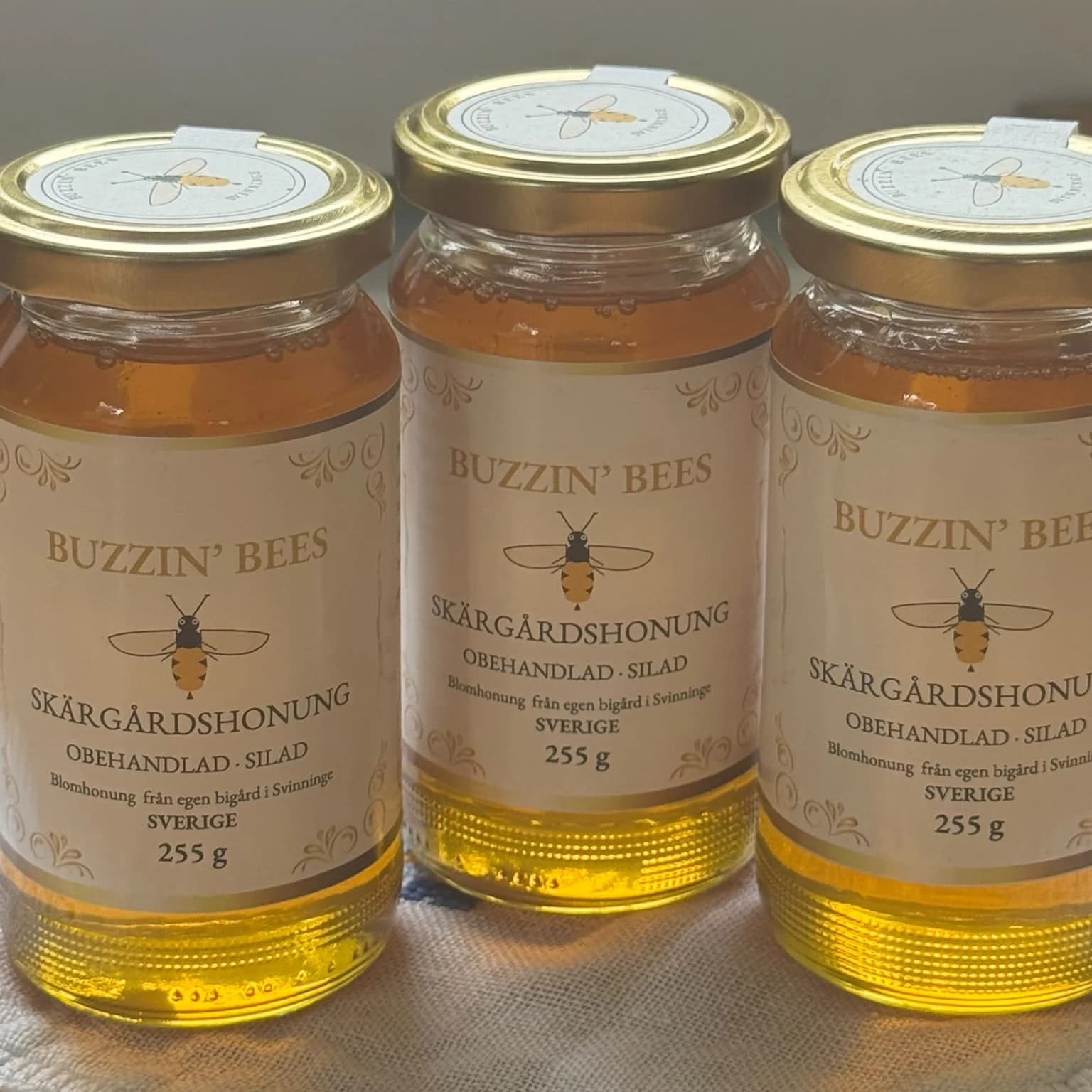
Produkter från detta avsnitt
Du kanske också behöver
Det här skrivs av en bigård, inte av en byrå
Buzzin’ Bees ligger i Svinninge. Vi säljer honungen våra egna kupor gör, och Dr. Gost-tillskotten vi tar in till Sverige.