The Buzzing Hour
Rå vs. filtrerad honung: Vad vetenskapen säger
Lyssna på avsnittet
Är rå honung faktiskt bättre för dig, eller är det marknadsföring? Vi granskar forskningen om enzymer, pollen, antibakteriella egenskaper och EU:s märkningsregler.
"Rå" är ett av de mest använda och minst förstådda orden på en honungsetikett. I detta konsumentvänliga avsnitt reder vi ut vad som faktiskt skiljer rå honung från den upphettade, finfiltrerade produkt som fyller de flesta butikshyllor, och varför skillnaderna spelar roll för smak, näring och förtroende.
Vi börjar i vetenskapen. Honung är full av enzymer, spår av pollen och naturliga antibakteriella ämnen, och skonsam hantering bevarar dem. Kraftig upphettning och ultrafiltrering, som ofta används för att få honungen att rinna klar och långsamt i hyllan, kan ta bort mycket av det. Vi pratar om varför pollenhalten är viktig, vad som ger honung dess antibakteriella rykte, och ett av de mest missförstådda tecknen av alla: kristallisering. Långt ifrån ett fel är kristallisering oftast ett tecken på ren, rå och minimalt bearbetad honung. Vi förklarar varför, och hur du varsamt får tillbaka den i flytande form utan att förstöra den.
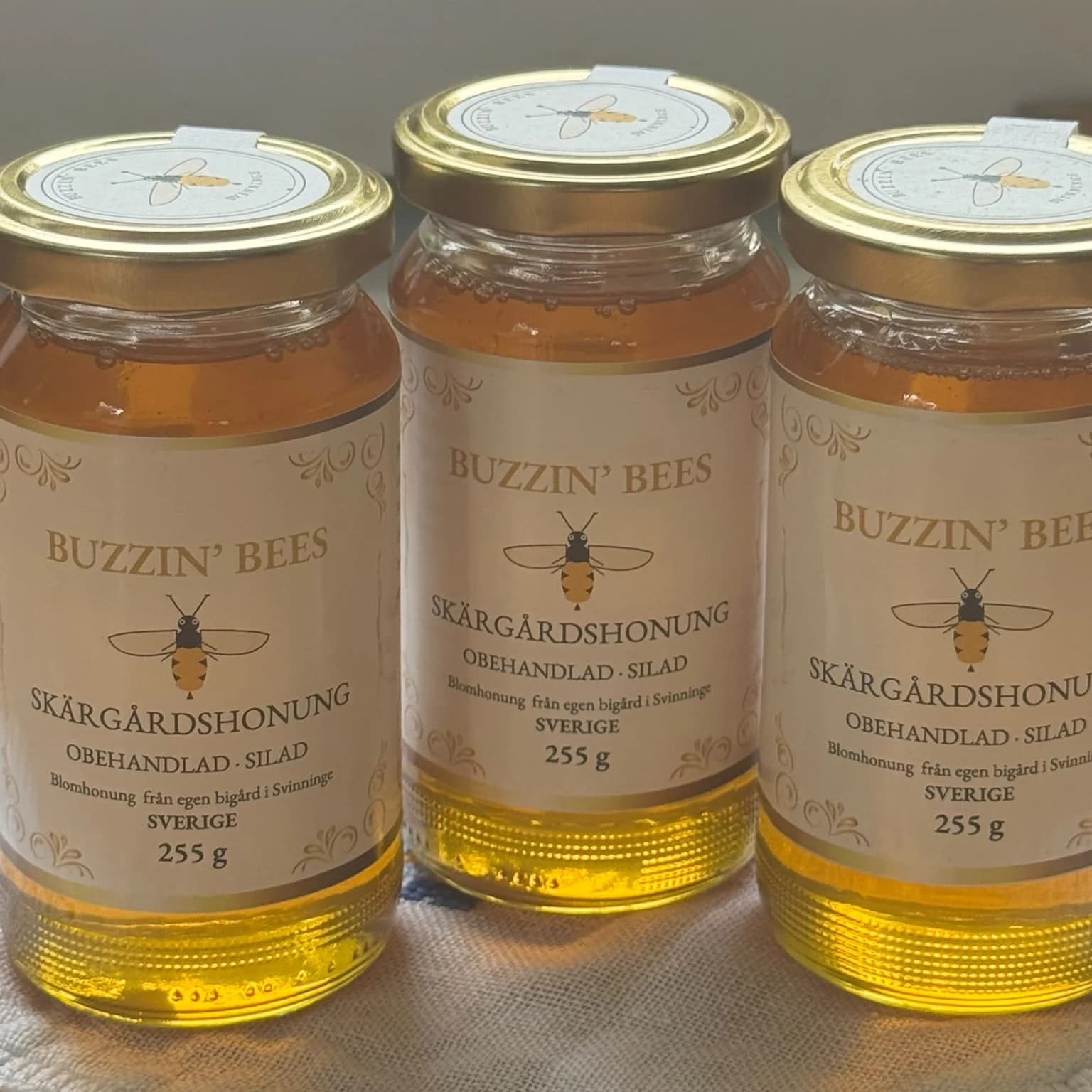
Sedan vänder vi oss till reglerna. EU:s och Sveriges honungsmärkning har verkliga krav kring ursprung och vad som får kallas honung, och vi hjälper dig att tyda en etikett så att du kan köpa med självförtroende. Vår egen råa honung ligger förstås på den ouppvärmda och ofiltrerade sidan av detta samtal, och vi är ärliga med varför vi gör den så. Om du någonsin stått vid honungshyllan och känt dig osäker är detta avsnitt för dig.
I detta avsnitt
- Vad rå honung egentligen betyder jämfört med upphettad och filtrerad honung
- Enzymer, pollen och naturliga antibakteriella egenskaper, och hur bearbetning påverkar dem
- Varför kristallisering är ett tecken på kvalitet, inte att honungen blivit dålig
- EU:s och Sveriges regler för honungsmärkning och hur du läser en burk
- Hur du varsamt gör kristalliserad honung flytande igen hemma
Viktiga lärdomar
- Skonsam hantering bevarar de enzymer, pollen och antibakteriella egenskaper som gör honung speciell
- Kristallisering är oftast ett gott tecken på ren, minimalt bearbetad honung
- Etiketter bär mer information än de flesta tror; lär dig läsa ursprung och bearbetningspåståenden
- Vår råa honung lämnas ouppvärmd och ofiltrerad med flit, för att bevara det naturen lagt där
Produkter från detta avsnitt
Du kanske också behöver
Det här skrivs av en bigård, inte av en byrå
Buzzin’ Bees ligger i Svinninge. Vi säljer honungen våra egna kupor gör, och Dr. Gost-tillskotten vi tar in till Sverige.