Julislungningen: Att veta när honungen är mogen på en nordisk sommar
Av Adam M Akkemik — biodlare i Svinninge · Jordbruksverket · Biodlarna Stockholm
En praktisk nordisk guide till sommarens honungsskörd — hur du avgör när honungen är mogen, varför vattenhalten avgör allt, hur du slungar och håller den rå, och hur mycket du lämnar kvar till binas invintring.
I juli får vi äntligen betalt för året. Här på vår bigård i Svinninge, strax norr om Stockholm på ungefär 59 graders nordlig bredd, har den nordiska sommarens långa ljus förvandlats till fullpackade ramar med täckt honung — och säsongens allra viktigaste fråga är bedrägligt enkel: är den mogen? Skörda en vecka för tidigt och honungen jäser i burken; skörda utan omsorg och du tar foder som samhället behöver för att klara vår långa vinter. Att träffa rätt är hela hantverket.
När honungen är mogen: mognadsprovet
Honung är nektar som bina torkat. Dragbina bär in nektar som är ungefär 70-80% vatten; inne i kupan fläktar husbina med vingarna i dagar för att avdunsta ner det till omkring 18%, och först då täcker de cellen med vax. Den täckningen är binas egen signatur på att honungen är färdig.
Det tal som betyder något är vattenhalten, och under den finns en hård gräns:
- Under ungefär 20% vatten är säkerhetsgränsen. Över 20% blir risken stor att honungen jäser. Det är inte bara tradition — det sammanfaller med EU:s lagstadgade gräns på runt 20% för honung (ljunghonung tillåts något högre, kring 21,4%).
- Kring 17-18% är den praktiska idealnivån. Under ungefär 17% kan honungen helt enkelt inte jäsa. Det ser vi som vårt mål, inte som lagen.
Hur provar vi det i praktiken?
- En refraktometer är det pålitliga verktyget. En enda droppe på prismat ger en direkt avläsning av vattenprocenten — inga gissningar.
- Tvåtredjedelsregeln är den klassiska reservmetoden. Har du ingen refraktometer bör en ram vara minst två tredjedelar täckt innan du tar den. Täckningen ensam är ingen absolut garanti, men den är en god tumregel.
- Skvätt-testet: håll en otäckt ram vågrätt och ge den en bestämd skakning. Sprutar nektar ut är den fortfarande för blöt — låt den vara.
Nordisk timing: en sommar av tydliga drag
Det nordiska honungsåret är kort, ljusstyrt och sammanpressat till några intensiva veckor. I stället för en lång skörd får vi tydliga vågor av nektar: raps först, sedan klöver och hallon, och senare lind in mot sensommaren. Svenska biodlare talar om tre faser — försommar, högsommar (ungefär juli) och höst, där den sista skörden på hösten kallas slutskattning. Juli är hjärtat i sommarhonungsskörden. Över en säsong ger ett svenskt samhälle i genomsnitt omkring 30-35 kg.
När du lyfter ramarna på skördedagen betyder lika mycket som vilka ramar. Honungen är som torrast i morgonsvalkan, ungefär mellan 05:30 och 11:30, eftersom bina fläktat ner ramarna under natten. I ett starkt drag stiger vattenhalten märkbart efter lunch när färsk nektar strömmar in. Vi undviker att skörda på eftermiddagen, efter regn eller mitt i ett kraftigt drag.
Slungning: håll det enkelt, håll det rått
När ramarna väl är mogna är arbetsgången rakt fram:
- Avtäck vaxlocken med kniv eller gaffel.
- Slunga ramarna i en slunga så att centrifugalkraften kastar ut honungen.
- Grovsila den genom en sil för att fånga vax och skräp — sila, ultrafiltrera inte.
- Låt den klarna ett dygn eller två så att fina bubblor stiger.
- Tappa på burk.
Två saker förtjänar att understrykas. För det första, sila varsamt i stället för att ultrafiltrera. Sedan 14 juni 2026 får honung som filtrerats så att pollenet i väsentlig grad rensats bort inte säljas som honung alls — bara som bagerihonung, märkt "endast för matlagning och bakning" (LIVSFS 2025:3). En skonsam silning är fortsatt tillåten och behåller både pollenet och namnet. För det andra, håll den rå. EU-reglerna kräver att honungens naturliga enzymer inte förstörs av värme; någon exakt temperatur står inte i lagen, men många råhonungsproducenter undviker att värma över ungefär 40°C som god praxis. Vår egen honung lämnas rå och ovärmd, vilket är precis därför vi är noggranna här.
En kort not om lånad utrustning: att slunga och tappa på din egen fastighet räknas som primärproduktion och är helt i sin ordning — även med en förenings lånade slunga använd hos dig. Det är att göra arbetet på annan plats eller genom ett kollektiv som kan utlösa krav på kommunregistrering.
Fukthantering: honung dricker luften
Honung är hygroskopisk — den drar fukt rakt ur den fuktiga luften. Skördar du en fuktig, regnig dag, eller slungar otäckta ramar, stiger vattenhalten. Därför slungar och tappar vi snabbt och förvarar honungen lufttätt.
Om ramarna visar lite för högt finns en skonsam räddning: ställ lådorna i ett varmt rum med en avfuktare och en fläkt i några dagar före slungning. En avfuktare kan sänka vattenhalten med ungefär 1% per dygn. Utöver det är disciplinen enkel — skörda bara täckta ramar med låg fukt. Hösthonungen är årets sorgebarn och ligger alltid nära gränsvärdena.
Vad du lämnar kvar till bina
Här spelar ärligheten störst roll. Ett samhälle måste äta från ungefär augusti till maj — omkring åtta månader inneslutet mot en nordisk vinter — och ett normalt samhälle behöver i storleksordningen 15-20 kg vinterfoder för att klara sig. De flesta svenska biodlare invintrar sina bin på sockerlösning: de lämnar kvar en del honung, matar tillbaka socker och tar en fylligare skörd som följd. Den höstutfodringen heter invintring, och den börjar i samma stund som de sista ramarna kommer av — bina behöver varma veckor för att hinna ta ner fodret och täcka det. Hur många kilo, i vilken styrka och när du slutar står i Vinterfoder till bin.
Överskörda aldrig ett ungt eller svagt samhälle. Ett förstaårssamhälle bör bara invintras om det är verkligt starkt (som riktmärke ungefär sju ramar bin och fyra med yngel). Att ta för mycket från ett litet samhälle är inte bara dålig ekonomi — det är en fråga om överlevnad och djurvälfärd, för de bina är inlåsta i åtta långa månader.
Det är den här skörden som blir Skärgårdshonung från Svinninge i burk.
Ett ord om kvalitet, lag och säkerhet
Några fakta som skiljer god honung från marknadsföringspåståenden:
- Kristallisering är naturlig, inte ett fel. Rapshonung sätter sig extremt snabbt och fint — du måste skörda och slunga den tidigt, annars stelnar den i vaxkakan.
- HMF och diastas är de juridiska måtten på "rå". HMF bör vara högst 40 mg/kg (den stiger med värme och ålder), och diastas minst 8 på Schade-skalan (det enzymet förstörs av värme). Lågt HMF och högt diastas signalerar båda färsk, skonsamt hanterad honung.
- Ursprungsmärkning är obligatorisk. Från den 14 juni 2026 måste blandningar lista alla ursprungsländer i fallande ordning med procentandelar; en svensk enkelursprungsburk märks helt enkelt "Sverige". Den gällande svenska honungsföreskriften är LIVSFS 2025:3.
Och den rad vi aldrig utelämnar: ge aldrig honung till ett barn under 12 månader. Honung kan bära sporer av Clostridium botulinum som ett spädbarns tarm ännu inte klarar av, och följden — spädbarnsbotulism — är allvarlig. Det är den enskilt viktigaste säkerhetsnoten på varje burk.
Träffa rätt på mognaden, respektera vattengränsen, håll den rå och lämna bina tillräckligt — då är en julislungning i det nordiska ljuset honung när den är som allra bäst. Från oss alla på Buzzin' Bees — glad skörd.
Vanliga frågor
När skördas honungen?
När bina torkat ner den under ungefär 20 procent vatten — punkten där jäsningsrisken blir allvarlig, och ungefär EU:s lagstadgade gräns — med 17–18 procent som praktiskt mål, eftersom honung under ungefär 17 procent helt enkelt inte kan jäsa. I Sverige ligger sommarskörden i juli, och den sista skörden på hösten kallas slutskattning.
Hur provar man om honungen är mogen?
En refraktometer är det pålitliga verktyget — en droppe på prismat läser av vattenprocenten direkt. Har du ingen är den klassiska reservmetoden att ramen ska vara minst två tredjedelar täckt innan du tar den, plus skvätt-testet: håll en otäckt ram vågrätt och ge den en bestämd skakning, och sprutar nektar ut är den fortfarande för blöt.
Vilken tid på dygnet ska man skörda?
I morgonsvalkan, ungefär mellan 05:30 och 11:30, eftersom bina fläktat ner ramarna under natten. I ett starkt drag stiger vattenhalten märkbart efter lunch när färsk nektar strömmar in, så vi undviker eftermiddagen, dagen efter regn och mitt i ett kraftigt drag.
Hur mycket honung ska man lämna kvar till bina?
Ett samhälle ska äta från ungefär augusti till maj — omkring åtta månader inneslutet mot en nordisk vinter — och ett normalt samhälle behöver i storleksordningen 15–20 kilo vinterfoder för att klara sig. De flesta svenska biodlare lämnar kvar en del honung, matar tillbaka sockerlösning under hösten och tar en fylligare skörd som följd.
Får filtrerad honung fortfarande kallas "honung"?
Nej. Sedan 14 juni 2026 får honung som filtrerats så att pollenet i väsentlig grad rensats bort inte säljas som honung över huvud taget — bara som bagerihonung, märkt "endast för matlagning och bakning" (LIVSFS 2025:3). En skonsam grovsilning är fortsatt tillåten, behåller pollenet och därmed namnet.
Produkter som nämns i artikeln
Du kanske också behöver
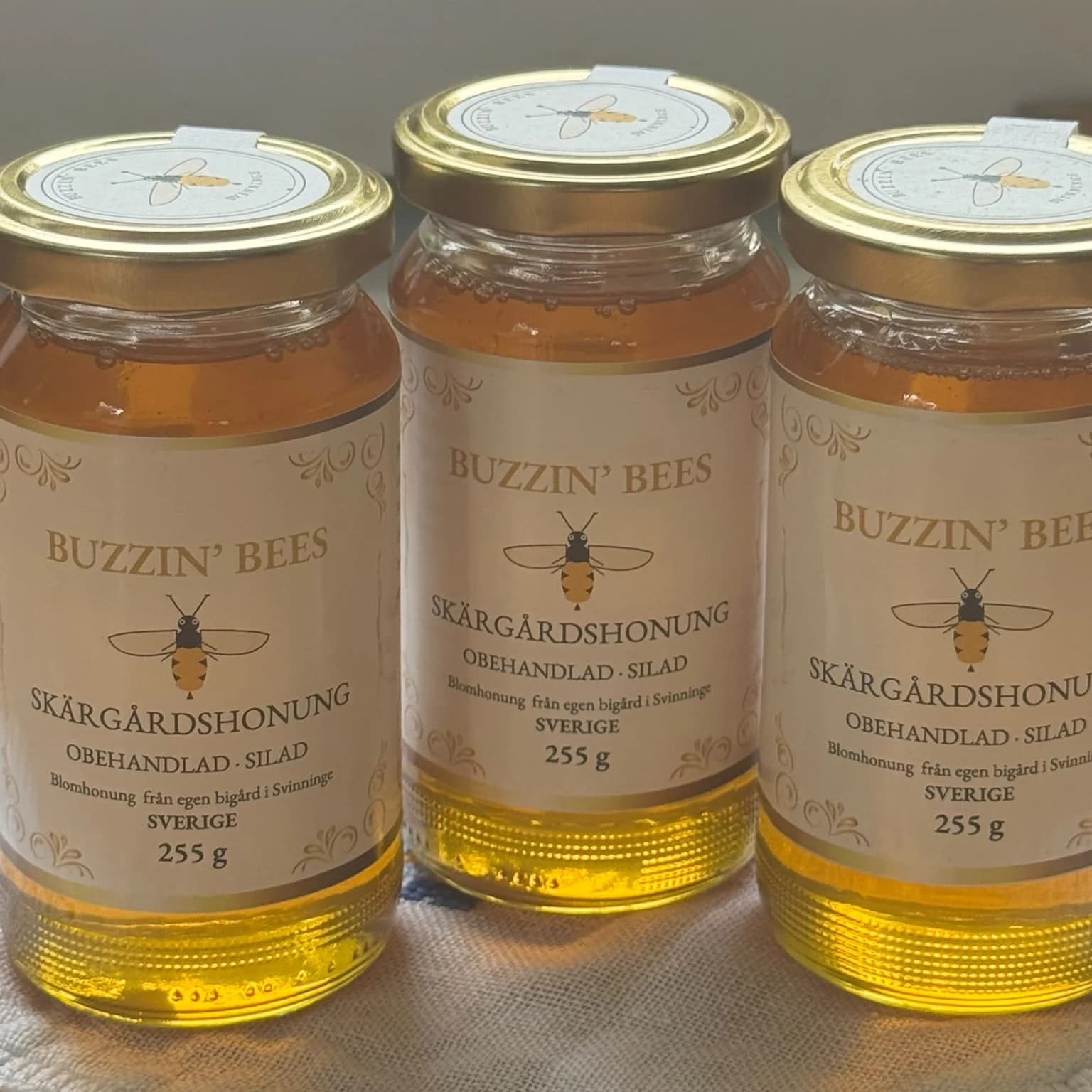
Det här skrivs av en bigård, inte av en byrå
Buzzin’ Bees ligger i Svinninge. Vi säljer honungen våra egna kupor gör, och Dr. Gost-tillskotten vi tar in till Sverige.